
How to Get Rid of Construction Debris in Philadelphia
Construction waste accounts for over 600 million tons a year in the US, and if you just ripped out a bathroom or gutted a rowhome kitchen, a chunk of that is sitting in your living room right now. Here are your five real options, what each one legally allows in Philadelphia, and how to pick.
Your Five Options at a Glance
| Option | Best For | Trade-off |
|---|---|---|
| Municipal bulk pickup | A few bulky household items | Philadelphia excludes construction debris entirely |
| Dumpster rental | Full gut renovations and roof tear-offs | You load it, and street placement needs a permit |
| Self-hauling | A small pile if you own a truck | Multiple trips and all the lifting is yours |
| Full-service junk removal | Speed, tight rowhomes, no driveway | Higher per cubic yard, but labor is included |
| Reuse and recycling | Solid doors, cabinets, scrap metal | Takes sorting time, and not everything qualifies |
Rules differ by municipality across Philadelphia and the surrounding suburbs, so what your cousin in Delco does with his drywall may not be legal on your block. The materials in question here are drywall, lumber, ceramic tile, concrete, roofing shingles, doors, cabinets, tubs, metal, and other bulky items from renovation or demolition.
Just want it gone? Discarded Junk Removal handles construction debris across Philadelphia with same-day and next-day pickup. For what it costs, see our construction debris removal cost guide.
First: Sort What You Have
Efficient disposal starts with knowing what is actually in the pile. Sorting before disposal saves money, cuts trips, and keeps recyclable material out of the landfill.
Typical residential C&D debris includes drywall and plaster, framing lumber and plywood, treated wood, insulation, carpet, vinyl flooring, ceramic tile, brick, concrete, stone, metal studs, copper piping, windows, doors, fixtures, and cabinetry.
Separate it into distinct piles: clean wood, mixed demolition debris, masonry, metals, and anything potentially hazardous like old paint or suspected asbestos. Treated wood, vinyl flooring, and most demolition waste has to be thrown away as trash. Pressure-treated deck boards cannot go in a recycling bin, and they should never be burned.
Source separation matters financially as well as environmentally. A cleanly sorted load often qualifies for cheaper clean debris rates at the facility, while a contaminated mixed load pays the highest tier.
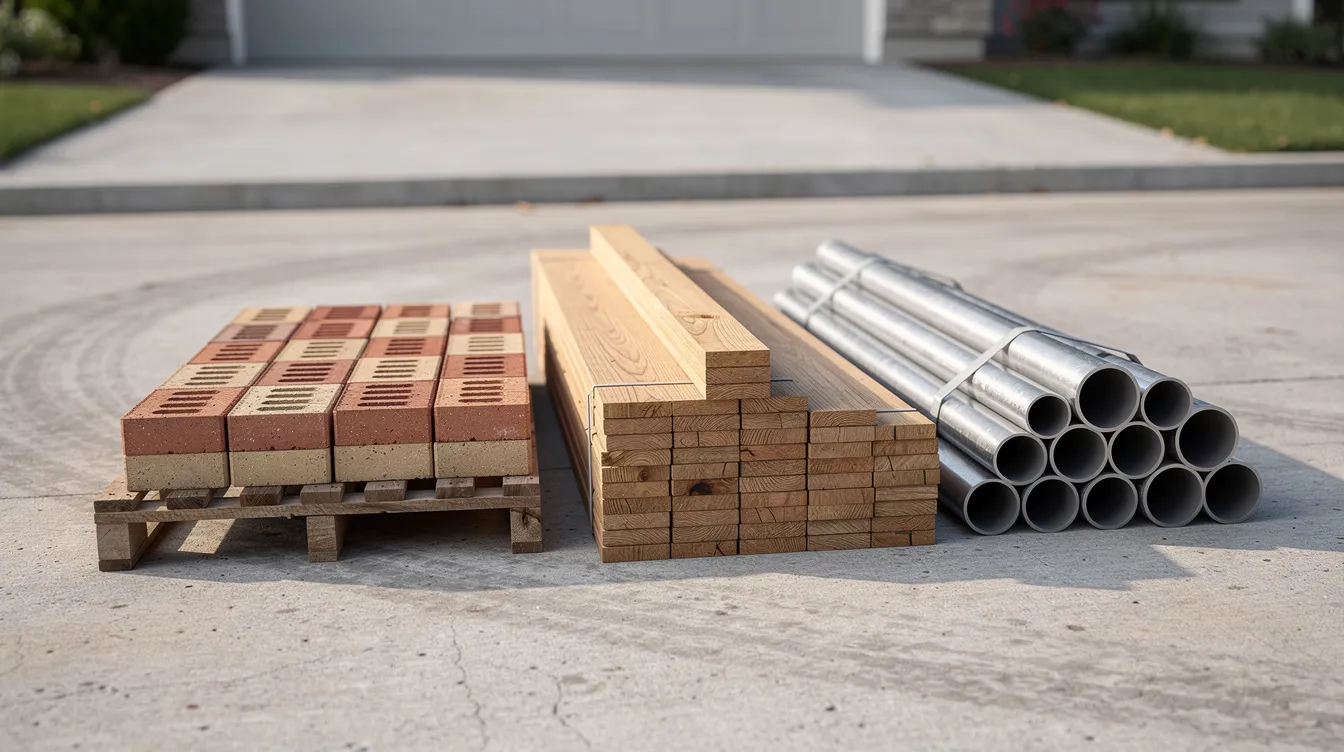
Sorted piles cost less to dispose of than one mixed heap
Option 1: Municipal Bulk Pickup
Some cities allow small amounts of construction debris at the curb. Philadelphia does not. The city's bulk collection program explicitly excludes construction and demolition material and limits pickup to four items per appointment, meaning furniture and appliances, not drywall or scrap wood.
Always check your municipality's website or call 311 before setting anything out. Where small amounts are allowed, the usual preparation rules are cutting lumber to four feet or shorter, bundling trim tightly, and bagging small rubble.
Bulk pickup is free but only fits very small DIY jobs. A kitchen demo will not qualify, and leaving prohibited debris at the curb risks a fine.
Option 2: Dumpster Rental
A roll-off makes sense for a major interior demolition, roof replacement, or whole-house flooring job, where you need a container to fill over days or weeks.
| Size | Rough Capacity | Best For |
|---|---|---|
| 10-yard | About 4 pickup loads | Bathroom remodel, small demo |
| 20-yard | Heavy-debris cleanouts | Whole-floor flooring replacement |
| 30-yard | Roughly 14 pickup loads | Multi-room gut renovation |
| 40-yard | Large-project capacity | Full rowhome gut or commercial demo |
Dumpsters take mixed material, but watch the constraints: weight limits bite hard with masonry and roofing, and there are contamination rules against liquids, asbestos, and electronics. In Philadelphia, a street-placed dumpster requires L&I compliance and a Streets Department permit, which is the step most homeowners miss.
The simplest way to decide: a dumpster is better when you want to load gradually and do not mind the lifting. Junk removal is better when you want a crew to clear it in one visit.
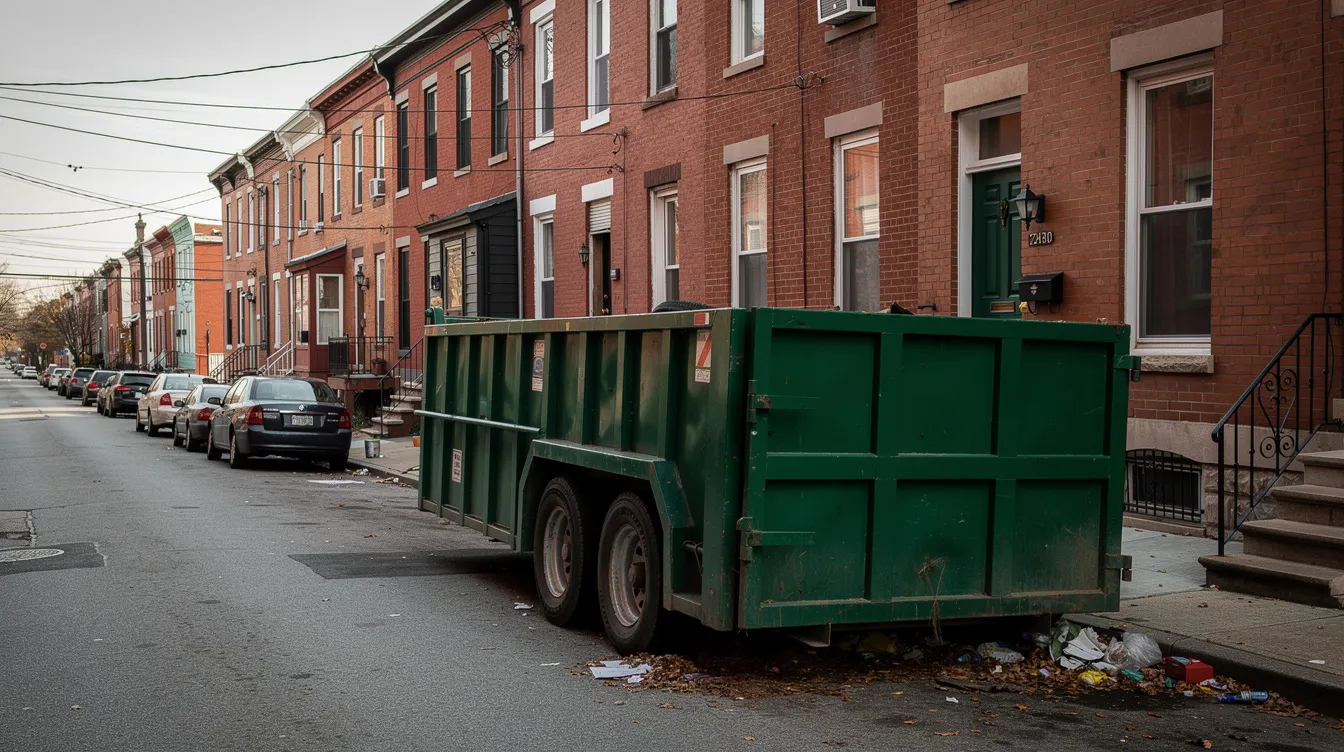
On many Philadelphia blocks, there is simply nowhere legal to put one
Option 3: Self-Hauling to a Disposal Site
Hauling it yourself is usually the cheapest route in raw dollars, assuming you have a truck and can lift heavy material. Some facilities run free drop-off days, so it is worth a phone call first.
- 1Load separated debris at home, keeping masonry, wood, and mixed waste apart
- 2Secure the load with tarps or straps. An unsecured load is both a road hazard and a ticket
- 3Drive to an approved facility, meaning a landfill, transfer station, or C&D debris site
- 4Pay by weight, typically per ton, with different rates by material type
One important local detail: Philadelphia's Sanitation Convenience Centers do not accept construction debris. You will need a private transfer station. Many facilities keep separate areas for clean concrete and asphalt, and some require drywall or roofing to be kept apart from everything else.
Option 4: Full-Service Junk Removal
This is the fastest option for small to mid-sized remodels, move-outs with leftover debris, or any situation where renting a dumpster is impractical.
A crew arrives in a box truck, does all the lifting from wherever the mess sits, whether that is a basement, a backyard, or a third-floor walk-up, sweeps the area, and handles disposal and recycling. That covers drywall, concrete, tile, lumber, doors, windows, tubs, cabinets, carpet and padding, roofing shingles, and countertops.
What Discarded Junk Removal brings to it:
- Same-day and next-day appointments
- Licensed and insured crews with pricing quoted upfront based on truck space
- Donation and recycling handled as part of the job rather than as an extra
It costs more per cubic yard than a dumpster, but the price includes all the labor. In rowhomes with narrow alleys and no driveway, it is frequently the only workable option.
Reuse, Recycling, and Donation
Up to 70 percent of construction waste can be recycled or repurposed, yet roughly a third of it still goes to landfill. What can be saved:
- Solid wood doors, intact cabinets, light fixtures, radiators, and hardware go to reuse centers and local charities. In Philadelphia, that includes Habitat for Humanity ReStore and salvage operations tracked through Circular Philadelphia.
- Concrete and clean brick get crushed and reused as gravel.
- Scrap metal from steel framing, copper pipe, and railings is highly recyclable and sometimes worth money.
- Clean wood can be chipped into mulch.
- Cardboard and plastic packaging from new fixtures are standard recyclables.
Some things genuinely cannot be salvaged: broken ceramic tile, drywall dust, heavily painted or rotted lumber, and contaminated flooring all go through normal disposal channels.
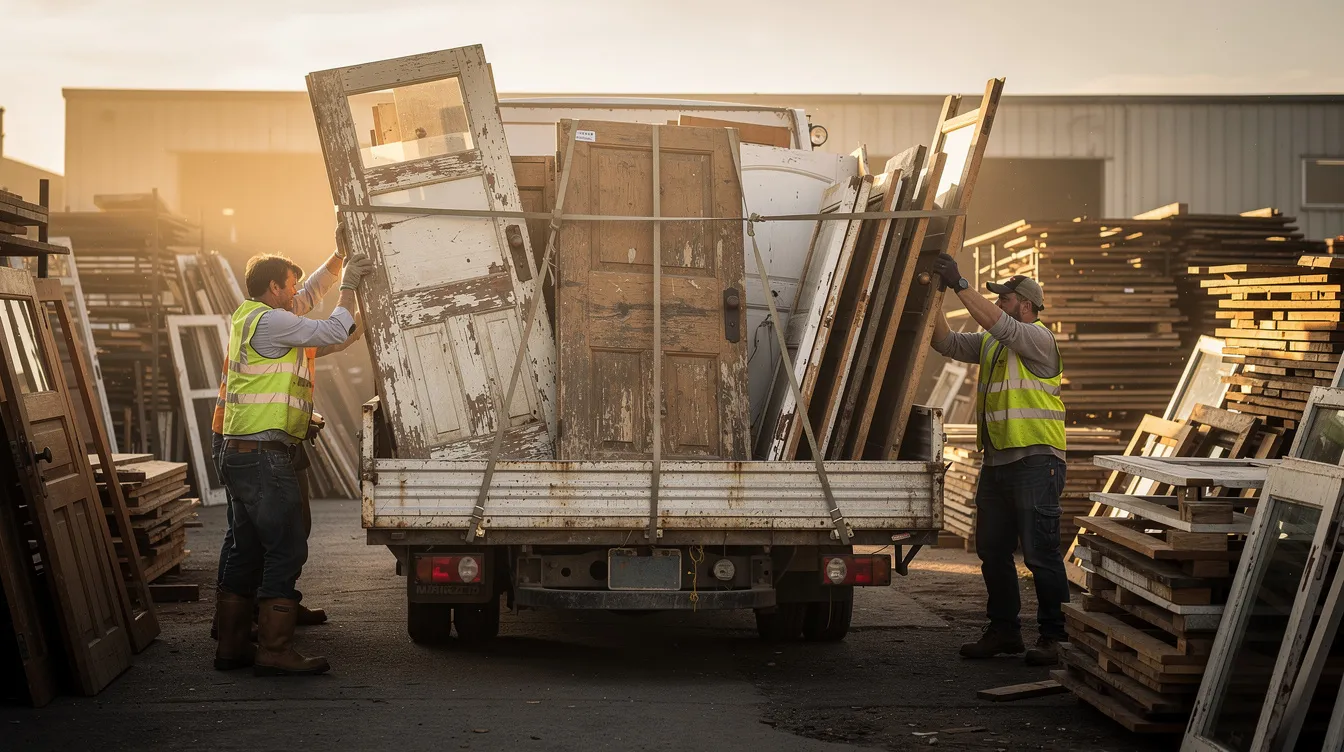
Doors, cabinets, and fixtures in decent shape rarely need to hit a landfill
What Never Goes in a Regular Load
Some material requires licensed contractors or designated drop-off events and must never be mixed into a dumpster or junk removal load:
- Asbestos-containing materials, common in homes built before the 1980s in insulation, siding, and old floor tile
- Lead-based paint chips or contaminated plaster from pre-1978 homes
- Solvents, adhesives, and oil-based paints
- Certain treated woods, including chromated copper arsenate
- Roofing tar and some roofing materials
Philadelphia runs scheduled household hazardous waste collection events where residents can drop off toxic, flammable, and corrosive items. Check the city site for current dates before you load the car.
Never burn demolition debris and never dump it illegally. Fines for improper construction debris disposal in Philadelphia can reach $1,500 or more, and illegal dumping costs the city millions every year.
Choosing the Right Option
It comes down to project size, site access, timeline, budget, and whether you want to do the lifting.
- Small DIY job with a few bulky items: check whether bulk pickup applies, or make a single self-haul trip
- Medium project like a bathroom demo or flooring swap: junk removal for speed, or a 10-yard dumpster to load at your own pace
- Large job like a full gut or roof replacement: a dumpster, or scheduled hauling across the project
When speed matters most, choose junk removal. When cost is the priority, self-haul. When you need flexibility across a week or more, rent the container.
Discarded Junk Removal also handles the mixed situations: post-renovation cleanups, move-outs with leftover debris, basements full of old renovation material, and commercial spaces after an office remodel.
Skip the Permit, the Truck, and the Heavy Lifting
Text a few photos and get a firm price back. Same-day pickup available across Philadelphia, with disposal, recycling, and donation runs handled for you.