
Construction Debris Removal Cost Guide (Philadelphia 2026)
Renovating a Philadelphia rowhome or tearing out an old kitchen? The cost that catches most homeowners off guard is getting rid of everything the demo leaves behind. Here is what construction debris removal actually costs in 2026, what moves the price, and how to estimate your own job before demo day.
Fast Answer: What Debris Removal Costs in 2026
For a typical residential renovation in Philadelphia, construction debris removal runs $200 to $800 per load of mixed, non-hazardous material. Most homeowners land between $450 and $600 for a moderate job.
Small Project
$200–$400Bathroom remodel, 4 to 8 cubic yards
Medium Project
$400–$800Kitchen teardown, 10 to 20 cubic yards
Large Gut Job
$800–$1,500+Multi-room, 25 to 40+ cubic yards
Per cubic yard, companies charge $50 to $80 nationally for standard construction debris. Philadelphia disposal fees push that closer to $60 to $85. Heavy materials like concrete, brick, tile, and roofing shingles add weight surcharges on top. Hazardous debris such as asbestos or lead-based paint needs a licensed abatement contractor and is priced entirely separately.
Upfront pricing, no end-of-job surprises. Discarded Junk Removal quotes construction debris removal across Philadelphia with same-day and next-day availability. For how the service itself works, see our guide to construction debris removal.
What Counts as Construction Debris?
Construction debris, also called construction and demolition or C&D waste, covers most material left over from a renovation, demolition, or new build. Pennsylvania's DEP defines it broadly to include wood, plaster, metal, asphaltic substances, brick, block, and unsegregated concrete.
- Light and medium materials: drywall, framing lumber, plywood, trim, scrap wood, doors, windows, cabinets, flooring, roofing materials, insulation, plastic wrap, and cardboard packaging
- Masonry and heavy materials: concrete slabs, brick, block, stone, asphalt, mortar, and ceramic tile, all of which drive weight-based pricing
- Fixtures and bulky items: bathtubs, sinks, countertops, vanities, radiators, and water-damaged furniture. A toilet counts as construction debris because of its weight and porcelain composition
- Hazardous materials: asbestos-containing materials, lead-based paint, solvents, and certain adhesives. These require licensed abatement contractors, not standard junk removal
Discarded Junk Removal handles nearly all non-hazardous construction debris in Philadelphia and will tell you when a specialist is needed for a regulated material.
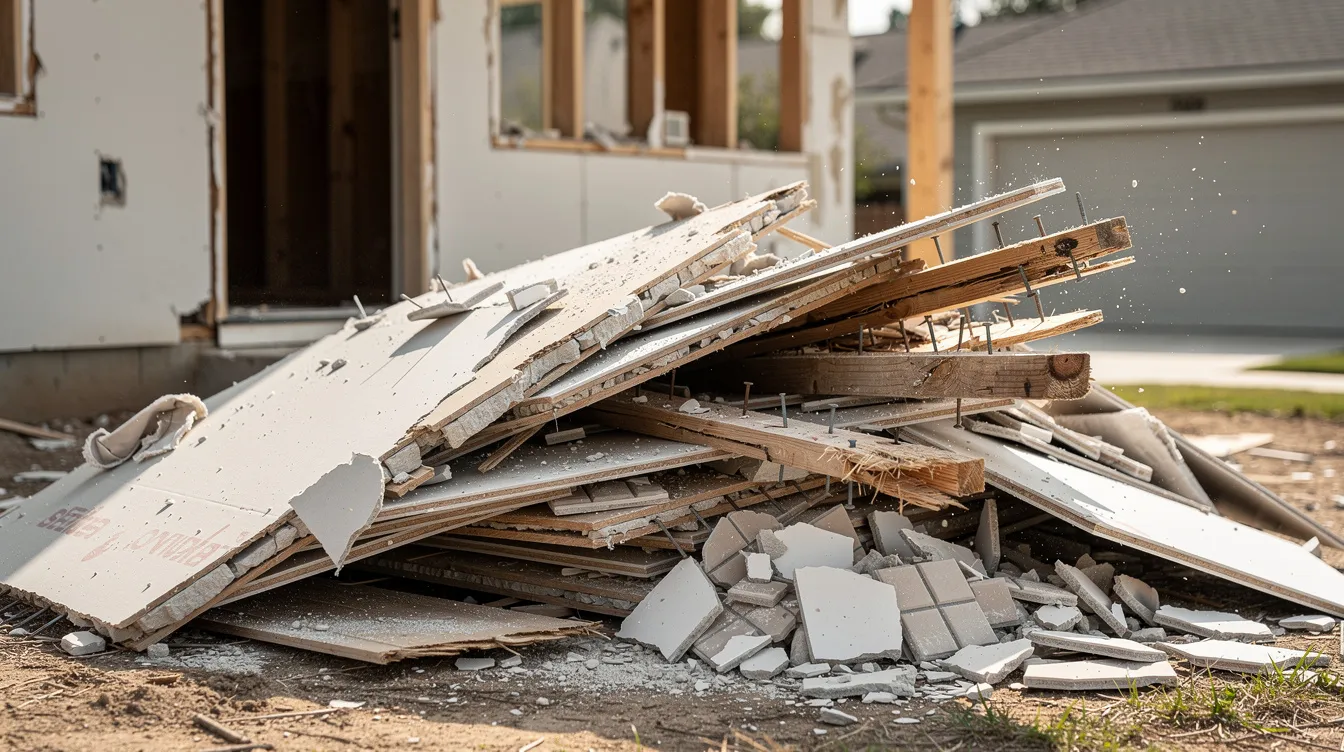
Mixed loads like this price on volume; add masonry and it shifts to weight
What Actually Drives the Price
No two renovations produce the same waste. Five factors do most of the work in setting your number:
- Volume in cubic yards. The primary lever for mixed, non-hazardous loads. Most haulers measure how much truck space your debris fills.
- Weight. Critical once concrete, brick, dirt, or thick tile is involved. Disposal facilities charge by the ton, so a small pile of masonry can cost more than a large pile of drywall.
- Labor. Time spent loading, hand-carrying from basements or upper floors, and working through tight rowhomes and alleys. Labor typically adds $100 to $300 depending on crew size and hours.
- Site access. Center City versus the suburbs, street parking versus a driveway, narrow staircases. Each one adds time.
- Disposal fees. Landfill and transfer station tipping charges, plus any special handling, are built into a professional quote.
How Debris Is Measured: Cubic Yards
One cubic yard is a 3 ft by 3 ft by 3 ft cube, or 27 cubic feet. Visually, that is about the size of a household washing machine.
- Small bathroom demo: 5 to 8 cubic yards
- Full kitchen renovation: 10 to 20 cubic yards
- Multi-room rowhome gut: 30+ cubic yards
Truck and dumpster sizes translate directly into pricing tiers. A 10 to 14 cubic yard load suits smaller jobs, while 20+ handles medium to large projects. Underestimating leads to extra trips and higher costs. Overestimating means paying for space you did not use. Photos or a short site visit are usually enough for an estimator to size it accurately before work starts.
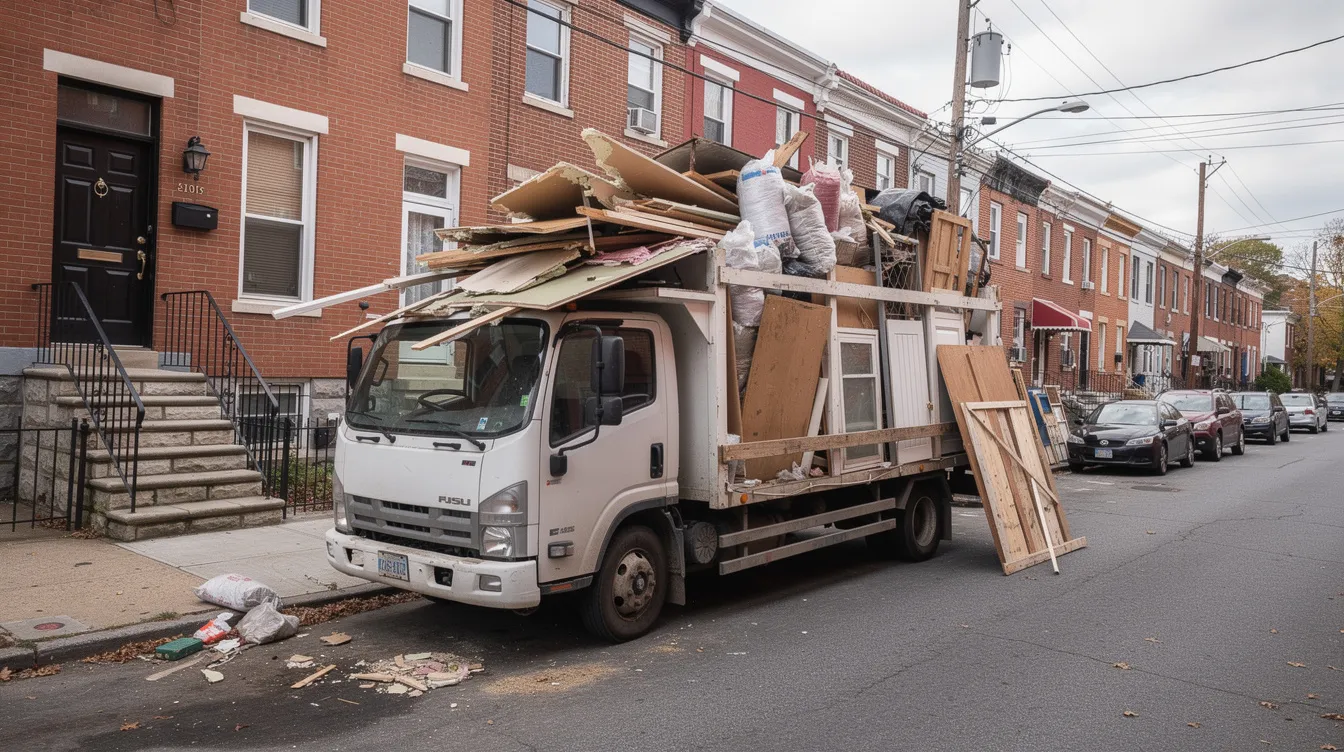
Volume in the truck is the starting point for most quotes
Weight vs. Volume Pricing
Some jobs price mostly on volume, others on weight, and knowing which applies to yours changes the budget considerably.
Volume-based pricing fits mixed, relatively light waste: drywall, framing lumber, insulation, packaging. The cost tracks the fraction of the truck you fill.
Weight-based pricing or surcharges kick in with dense material: concrete, brick, pavers, dirt, gravel, asphalt, thick ceramic tile. The difference is dramatic:
| Material | Approx. Weight per Cubic Yard | How It Prices |
|---|---|---|
| Drywall | 500 to 750 lbs | Volume |
| Framing lumber and insulation | 300 to 600 lbs | Volume |
| Broken concrete | 2,000 to 2,500 lbs | Weight, often per ton |
| Brick and block | 2,000 to 3,000 lbs | Weight, often per ton |
A 14 cubic yard load of mixed drywall and lumber usually stays within standard pricing. Just 3 or 4 cubic yards of broken concrete can hit weight limits and trigger a surcharge. Philadelphia-area facilities typically charge $60 to $100 or more per ton for construction waste beyond base allowances, so separating dense material when you can is worth the effort.
2026 Price Ranges in Detail
| Category | Philadelphia Range |
|---|---|
| Standard mixed debris (drywall, wood, light demo) | $60 to $85 per cubic yard |
| Heavy fill (concrete, brick, tile) | $60 to $100 per cubic yard, or $30 to $100 per ton at a transfer station |
| Hazardous debris (asbestos, lead paint, chemicals) | $150 to $300 and up, through a licensed abatement contractor |
| Roll-off dumpster rental (20 cubic yard) | $300 to $700 per week, plus permit if street-placed |
Add a 15 to 20 percent contingency to whatever you estimate. Hidden layers of tile, extra drywall, and surprise concrete under flooring are the norm, not the exception, in older Philadelphia housing stock.
Disposal Fees, Dump Sites, and Local Rules
Tipping fees are a large share of what you pay, and they vary by facility and by how cleanly the load is sorted.
- Facilities in and around Philadelphia charge per ton. Mixed C&D waste often runs $90 to $120 or more per ton, while cleanly separated concrete costs considerably less.
- Urban rates run higher than suburban ones because of limited landfill access, stricter rules, and fee minimums that suburban facilities may not have.
- Certain items carry their own fees at the dump: mattresses, tires, and appliances with refrigerants. Those get passed through in any honest estimate.
- Most municipalities prohibit putting construction debris out with regular trash, and a dumpster on public property needs a city permit.
- A licensed hauler handles the permits, disposal paperwork, and compliance, which removes your exposure to fines for improper disposal.
Discarded Junk Removal is licensed and insured in Pennsylvania and works within Philadelphia's asbestos and construction debris rules, recycling wherever possible.
Debris Types and Their Cost Impact
- Light to medium materials. Drywall, framing wood, trim, insulation, plastic, and cardboard load easily and price at standard volume rates. This is the bulk of most renovation waste.
- Flooring debris. Carpet and padding are bulky but light. Hardwood is denser and full of nails. Ceramic tile is heavy, dusty, and often needs breaking up, which raises both loading time and tonnage.
- Structural and masonry. Concrete footers, patio slabs, brick chimneys, and stone walls hit weight limits within a few cubic yards.
- Kitchen and bath fixtures. Cabinets, stone countertops, tubs, and toilets add volume and weight together. Porcelain is awkward and fragile, stone is extremely dense. These show up in house cleanouts and full remodels alike.
- Metals. Steel studs, copper pipe, aluminum, and old appliances are heavy but recyclable, and separating them can offset disposal fees. We handle appliance removal and pull recyclable metal out of loads where possible.
How to Estimate Your Own Job
You do not need to be exact. A rough number lets you compare quotes with confidence.
- 1Estimate cubic yards. Measure the pile's length by width by height in feet, then divide by 27. A pile 10 ft by 8 ft by 3 ft is 240 cubic feet, or about 8.9 cubic yards. At $65 per cubic yard, that is roughly $580 before surcharges
- 2Adjust for heavy material. For concrete or brick, estimate weight instead and apply local per-ton rates
- 3Factor in access. Third-floor walk-ups, tight hallways, and street-only parking add flat surcharges or hourly labor
- 4Add 15 to 20 percent contingency for hidden layers, water damage, and whatever is actually behind the wall
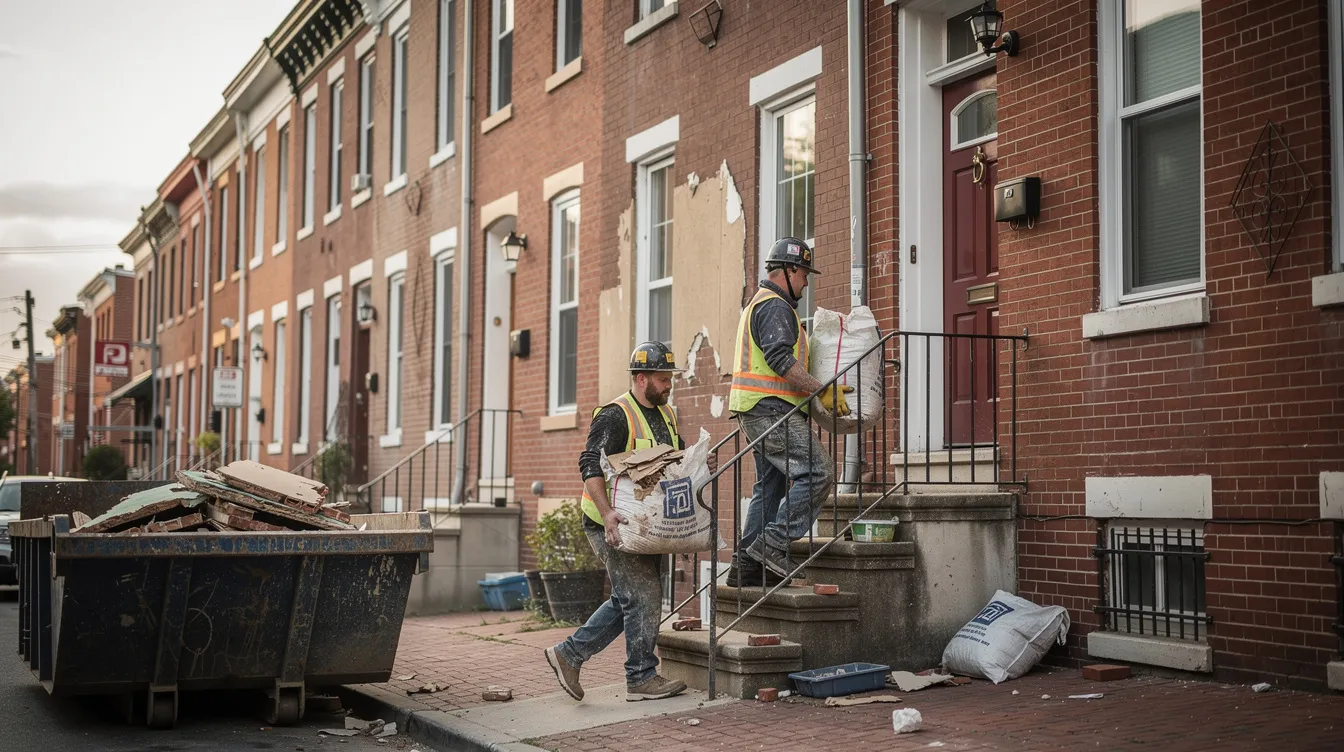
Access is the variable most homeowners forget to price in
DIY vs. Hiring a Pro
| Approach | What You Pay | What You Take On |
|---|---|---|
| Self-haul | Truck or trailer rental, fuel, plus $30 to $100 per ton in dump fees | Multiple trips, loading and unloading, sharp nails and heavy concrete on stairs |
| Dumpster rental | $300 to $700 per week, plus permit and overage fees | You load it yourself, but can do it gradually across the project |
| Full-service removal | $200 to $1,000+ all-in, including truck, labor, and disposal | Nothing. Crew handles lifting, hauling, permits, and compliance |
Self-hauling costs less in raw dollars, but the gap narrows fast once you count fuel, dump fees, and your own weekends. For small and medium residential jobs in Philadelphia, full service often lands close to DIY on total cost. Get a few quotes and weigh your own time and site access before deciding.
Six Ways to Lower Your Bill
- Sort recyclable metal and clean cardboard out of the mixed load. Diverting weight away from landfill tipping fees is the single biggest lever you control.
- Donate usable items. Cabinets, doors, windows, surplus tile, and fixtures in decent shape go to reuse centers like Habitat for Humanity ReStore, which cuts volume and may earn a deduction.
- Consolidate into fewer, larger loads rather than several small pickups. Bulk pricing is better per yard.
- Stage debris near an exit before the crew arrives. Less carry time means less labor on the invoice. Keep fire exits clear.
- Check municipal options for clean concrete or metal, which some programs take at reduced or no cost.
- Never mix hazardous material into a standard load. Keep anything suspect separate and ask before demo day.
Why Philadelphia Homeowners Call Discarded Junk Removal
Whether it is a small bathroom teardown or a full property cleanout, the crew handles the heavy lifting.
- Same-day and next-day service for tight project timelines, with all lifting and loading included
- Transparent pricing based on volume and material type, quoted before work begins
- Licensed and insured in Pennsylvania, which matters when hauling heavy debris through narrow staircases or multi-unit buildings during apartment cleanouts
- Responsible disposal with recycling and donation of usable material
- Beyond construction debris: landlord move-outs, estate cleanouts, attic cleanouts, post-renovation cleanups, and recurring pickups for contractors
Get Your Construction Debris Quote
Send a few photos of the site and get a firm number back. Same-day pickup available across Philadelphia, with labor and disposal included in the price.