
How to Get Rid of Old Furniture in Philadelphia
Whether you are moving out of a University City apartment or clearing a rental in South Philly, getting rid of old furniture turns into its own project fast. Here are your three real options, what each one actually requires, and how to pick.
Your Three Options
| Option | Cost | What It Requires From You |
|---|---|---|
| City bulk pickup | Free | You get it to the curb yourself, by appointment, and only if your property qualifies |
| Donation | Free, possible tax deduction | Items must be in good condition, and pickup lead times run longer |
| Professional removal | Paid | Nothing. Crew handles the lift, the stairs, and the disposal |
The right choice usually comes down to what the job physically involves. Wrestling a sectional down three flights in a rowhome, bagging a mattress in plastic at a walk-up, or clearing office desks the city will not collect at all are very different problems from putting one chair on the sidewalk.
City Bulk Pickup
The Philadelphia Department of Sanitation runs a residential bulk collection program for large items that do not fit in regular trash. It is appointment-based, and you schedule through the city portal or by calling 311.
Who qualifies: Single-family homes and multi-unit buildings up to six units. Larger buildings and any business have to use a private hauler.
What they take: Standard sofas, chairs, non-metal bed frames, box springs, and similar household furniture. What they will not take includes sofa beds with metal folding mechanisms, construction debris, and commercial office furniture.
How to prepare:
- Put items out no earlier than 5pm during Daylight Saving or 7pm the rest of the year, and have everything out by 7am on pickup day
- Label each item with the four-letter pickup code from your confirmation email
- Remove doors and drawers from dressers so nothing shifts
- Keep the sidewalk passable
Item limits and appointment frequency change from time to time, so confirm the current caps on the city portal when you book rather than going off what a neighbor told you.
The catch: No help with the heavy lifting. The city collects from the curb, which means getting a queen box spring down two flights of rowhome stairs is entirely on you. Leaving furniture out without following the procedure can also earn you a fine.
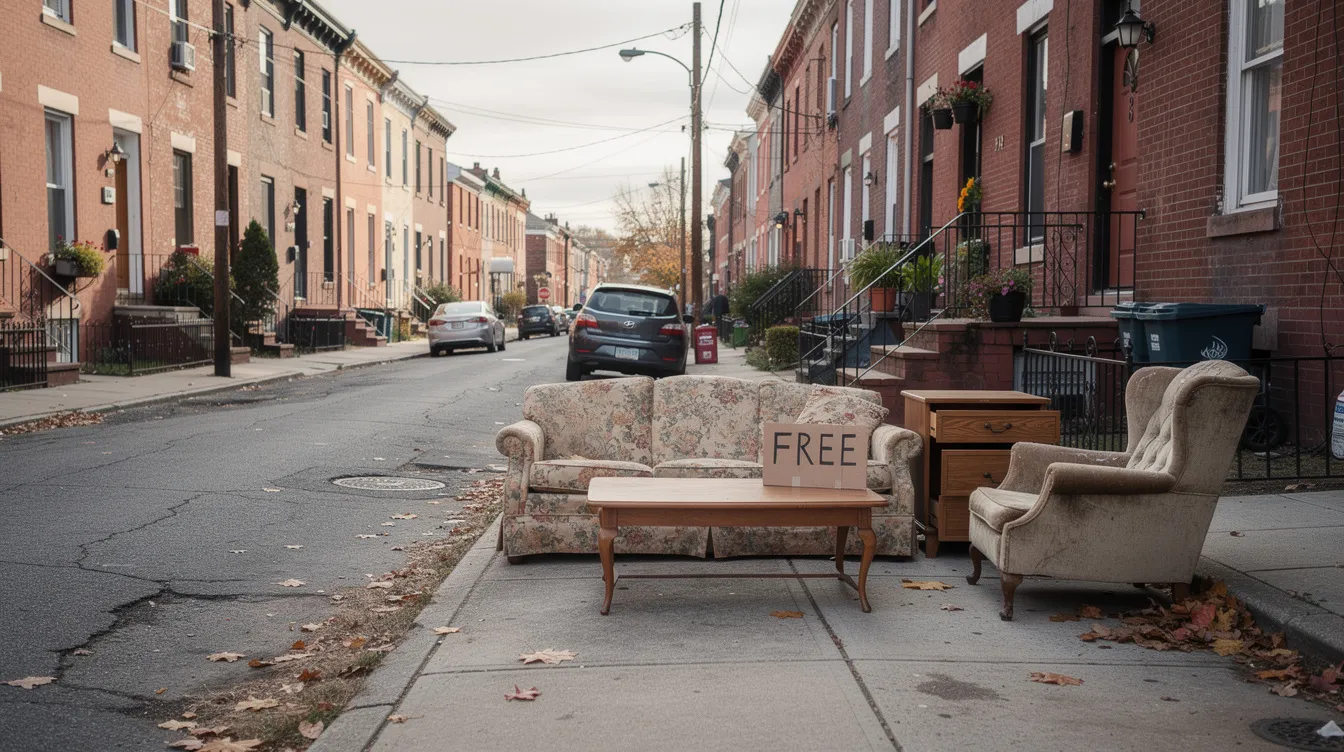
Curbside works, provided you can get it to the curb
Donating Usable Furniture
If the piece still has life in it, donating keeps it out of the landfill and may earn you a deduction.
Habitat for Humanity Philadelphia ReStore takes gently used furniture including tables, chairs, dressers, and decor. Goodwill and the Salvation Army run home pickups. Smaller neighborhood shops like Philly AIDS Thrift are worth a call too.
The condition bar is real: no major rips, large stains, pet damage, or broken frames. Mattresses have to be clean and pest-free, and plenty of organizations will not take them at all. Check each group's guidelines and call before you drive over or book a pickup.
The trade-off is timing. Charity pickups tend to book out further than a removal crew, which matters when you have a move-out date. We can also handle donation drop-offs on your behalf when items qualify, combining several pieces into one furniture removal trip.
Recycling and Disposal for Damaged Pieces
Not everything can be donated. Severely worn, water-damaged, or pest-infested furniture needs proper disposal instead.
Sometimes recyclable: metal bed frames, metal table legs, and supporting hardware go to scrap. Some untreated wood is accepted by wood recyclers.
Almost always trash: soiled upholstery, foam, particleboard that has soaked up liquid, and anything with mold or an active pest problem.
Bulky appliances like refrigerators and air conditioners contain refrigerant regulated by the EPA under 40 CFR Part 82 and require specific handling, so they cannot simply go out with the furniture.
We sort every load, separating donation-worthy pieces, recyclable metal and e-waste, and actual trash, so as little as possible ends up in a landfill.
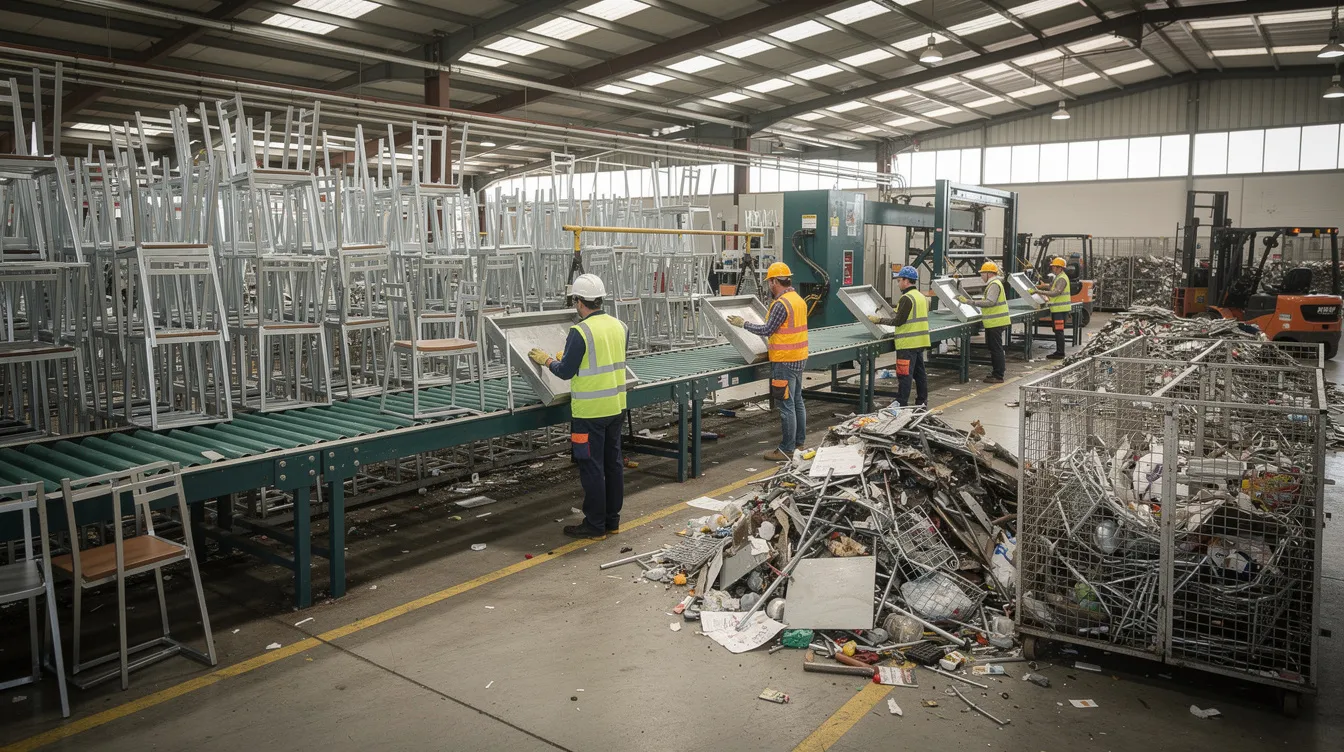
Metal frames and hardware go to scrap rather than the landfill
Why People End Up Hiring Someone
DIY furniture removal in Philadelphia runs into the same obstacles over and over: narrow rowhome staircases, third-floor walk-ups with no elevator, no place to park a rental truck, and the genuine physical risk of moving a 200-pound dresser alone.
What you get for the money:
- No lifting on your part
- No truck rental and no dump run
- Same-day or next-day scheduling
- Upfront pricing with no hidden fees
- Removal from inside the home, whether that is a basement, an attic, or a third floor
Crews use dollies, straps, and protective padding, which prevents both injuries and the doorframe damage that turns a free curbside job into an expensive repair. Being licensed and insured also protects homeowners, landlords, and businesses if something goes wrong mid-carry.
On cost: the average full-service junk removal job in Philadelphia runs around $294, with most falling between roughly $161 and $452 depending on volume. Set against truck rental, dump fees, and a lost weekend, the gap is narrower than it looks.
How Our Furniture Pickup Works
- 1Get in touch by phone or online and describe what needs to go
- 2Get an upfront price range before anyone comes out
- 3Pick a time window, often same-day or next-day
- 4Firm quote on site after a walkthrough, with work starting only once you approve it
- 5We clear it out, handling all lifting from any floor, then sweep up
That covers sofas, sectionals, recliners, mattresses and box springs, dressers, dining sets, office desks and chairs, and the entertainment centers nobody wants anymore, through whatever tight hallways and staircases the house has.
Payment comes after the job is done, with a clear receipt and no surprise surcharges for stairs, distance, or fuel.
Preparing for Pickup
- Sort in advance. Decide what is being donated, recycled, and hauled. It speeds up the appointment considerably.
- Clear a path. Move rugs, small items, and anything fragile out of the route between each piece and the door.
- Disassemble what you can. Legs off tables, mirrors off dressers, bed frames broken down. We can do this on site if you would rather not.
- Check building rules. Condos and office buildings often require reserved elevator time, specific move-out hours, or a certificate of insurance.
- Disclose pests. Bed bugs, roaches, or mold need different handling. Telling the crew in advance is not a problem. Finding out mid-carry is.
Which Option Fits Your Situation
City bulk pickup works for a small number of eligible items when you have time and can manage the curb yourself. Donation is right for furniture in good condition when your timeline has room. Professional removal covers everything else, particularly deadlines, volume, and anything you cannot physically move.
A tenant with one lightweight chair and no deadline should schedule a city pickup and be done with it. A landlord with an apartment full of abandoned furniture before the next lease starts saves a week by calling a crew. Businesses handling property cleanouts have no city option at all, since the program does not cover commercial properties.
Weigh cost against timing, physical ability, parking, and how much you care where the pieces end up.
Furniture Gone by Tomorrow Morning
Same-day and next-day furniture removal across Philadelphia. We take it from wherever it sits, no stairs surcharge, and handle the donation runs.