
What Is the Best Way to Clean Out a Garage?
If your garage has become a wall of cardboard boxes, broken toys, and camping gear nobody has touched since 2019, you have plenty of company. Here is the full process for getting it back, from the first box out to the final sweep.
The Short Answer
The best way to clean out a garage is one planned push, not a series of half-hearted weekend tidies. Empty it completely, sort honestly, clean the bare space, then put back only what belongs there.
- 1Pick a date and gather supplies. Block a full Saturday. Heavy-duty bags, a shop vac, gloves, degreaser, a marker
- 2Empty the entire garage onto the driveway so you can see bare floor, walls, and ceiling
- 3Sort into keep, donate, sell, trash and be strict about the one-year rule
- 4Deep clean floors, walls, and surfaces while the space is empty and every problem is visible
- 5Put things back by zone, off the floor wherever possible
The target: by sundown, the car is parked inside, or there is enough clear floor for a full workout.
Why Garages Get Like This
Garages become catch-alls because they sit outside the main living space. Leftover lumber from a bathroom renovation, outgrown sports equipment, holiday decorations that never made it to the attic, garden supplies shoved in after fall. None of it feels urgent. A few years later the car lives in the driveway permanently.
A 2021 Stanley Black & Decker survey found 62 percent of US adults call the garage the most cluttered space in their home, and 36 percent can no longer park a vehicle inside because of it.
The costs are real: cars taking weather damage, trip hazards underfoot, pests nesting in damp cardboard, and time lost hunting for a tool buried behind old paint cans.
Decide What the Garage Is For
Before touching a single box, decide what the space should be by next weekend. A clear goal makes every sorting decision faster and stops you from just rearranging the pile.
- Park a sedan and an SUV with room to open doors on both sides
- Clear enough floor for a treadmill, weight rack, and a mat
- A workbench and tool wall on one side, bikes and sports gear on the other
- Clean storage for seasonal decorations and car supplies
Sketch a rough layout on paper. Mark the car zone, the bin area, seasonal storage, and the walkways. Decide up front what does not belong in a garage at all: documents, heirloom furniture, photos, and delicate fabrics all belong inside the house, where humidity and temperature swings will not destroy them.
Pick the Day and Gather Supplies
Weather matters more than people expect when you are staging everything in the driveway for hours. In Philadelphia, April, May, September, and October give you mild temperatures and lower humidity. Block at least four to six hours. A rushed 90-minute session ends with half the garage untouched and the driveway full.
| Category | What You Need |
|---|---|
| Sorting | Heavy-duty trash bags, boxes, permanent markers, masking tape |
| Cleaning | Broom, shop vac, mop and bucket, degreaser, microfiber cloths |
| Safety | Dust mask or respirator, safety glasses, work gloves, closed-toe boots |
| Tools | Screwdriver, wrench, utility knife |
Set up four labeled zones in the driveway before you pull anything out: keep, donate, sell, trash. Tarps on the pavement or signs taped to boxes both work. For a big cleanout, book a removal truck a day ahead so the trash and bulky items leave the same day rather than sitting in the driveway until Monday.
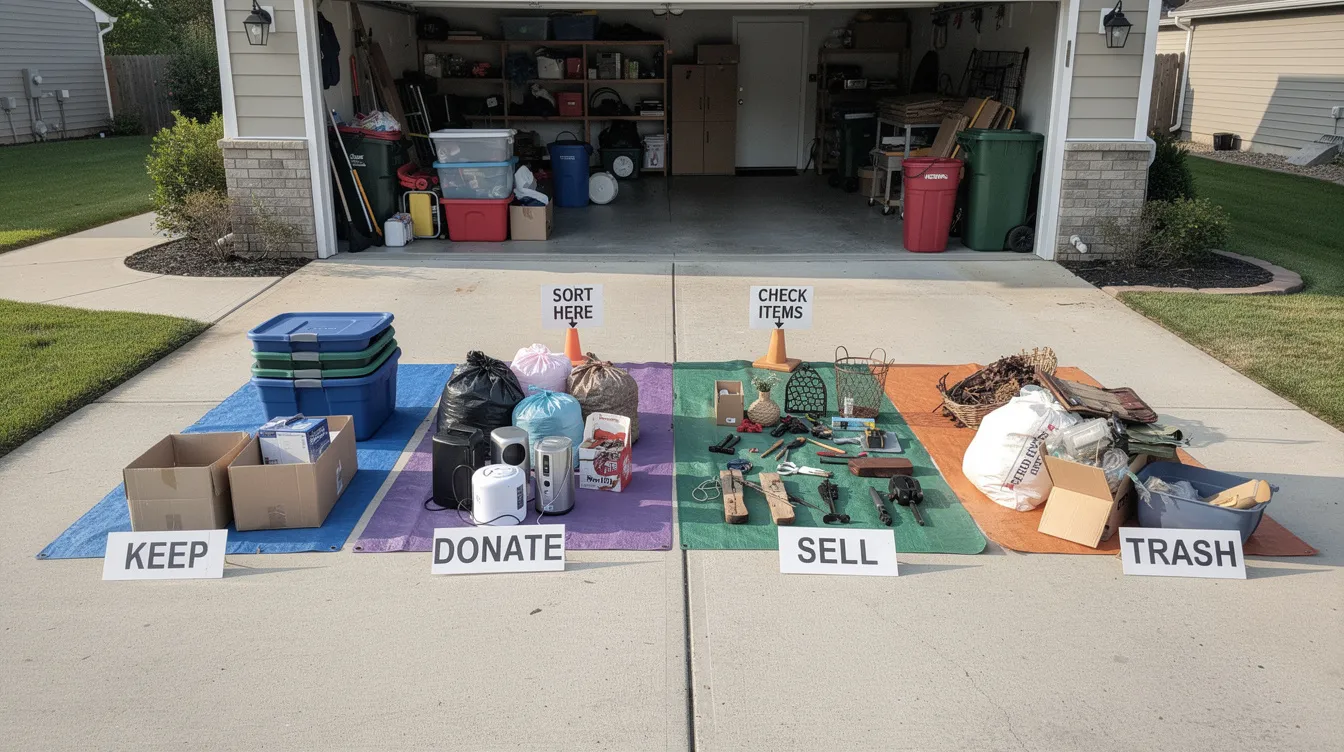
Zones in the driveway before the first box comes out
Empty It Completely First
Cleaning around piles is like mopping around furniture. You miss every problem hidden underneath. The goal is bare floor, bare walls, bare corners.
Work in stages: cars out first, then large items like appliances, furniture, mowers, and exercise equipment, then boxes and bins, then all the loose small stuff.
For tight rowhome driveways and shared alleys, work in halves instead. Clear the left side to the floor, clean it, then do the right. Keep heavy boxes low while staging, do not block the sidewalk, and keep a clear path to the street.
Do not hurt yourself over a broken treadmill. Old refrigerators, water-logged sofas, and dead exercise machines are the things that end garage cleanouts in an ER visit. That is what appliance removal exists for.
Sorting: Keep, Donate, Sell, Toss
This is where a chaotic garage becomes a clean one, and it requires honesty. Most people badly overestimate how much they need to keep.
Apply the one-year rule. If you have not touched it in twelve months and it is not expensive, sentimental, or safety-related, it goes. Two years is the outer limit for anything you are still telling yourself you will use.
The usual departures:
- Outgrown sports gear and broken toys
- Old paint that has separated or frozen through a winter. Unopened latex paint lasts about ten years; anything older is not worth the shelf space
- Broken tools and rusted garden supplies
- The cardboard boxes you saved just in case
- Outdated electronics and tangled cables
- Seasonal decorations you have not put up in years
- Clothes and camping gear stored more than three years
Then move each pile immediately: bag the trash, box donations with a same-week drop-off planned, photograph anything worth selling, and group the keepers by category. We take mixed loads of garage junk, furniture, appliances, and electronics in one trip and route usable items to donation centers. If other rooms need the same treatment, that extends to full house cleanouts and storage unit cleanouts.
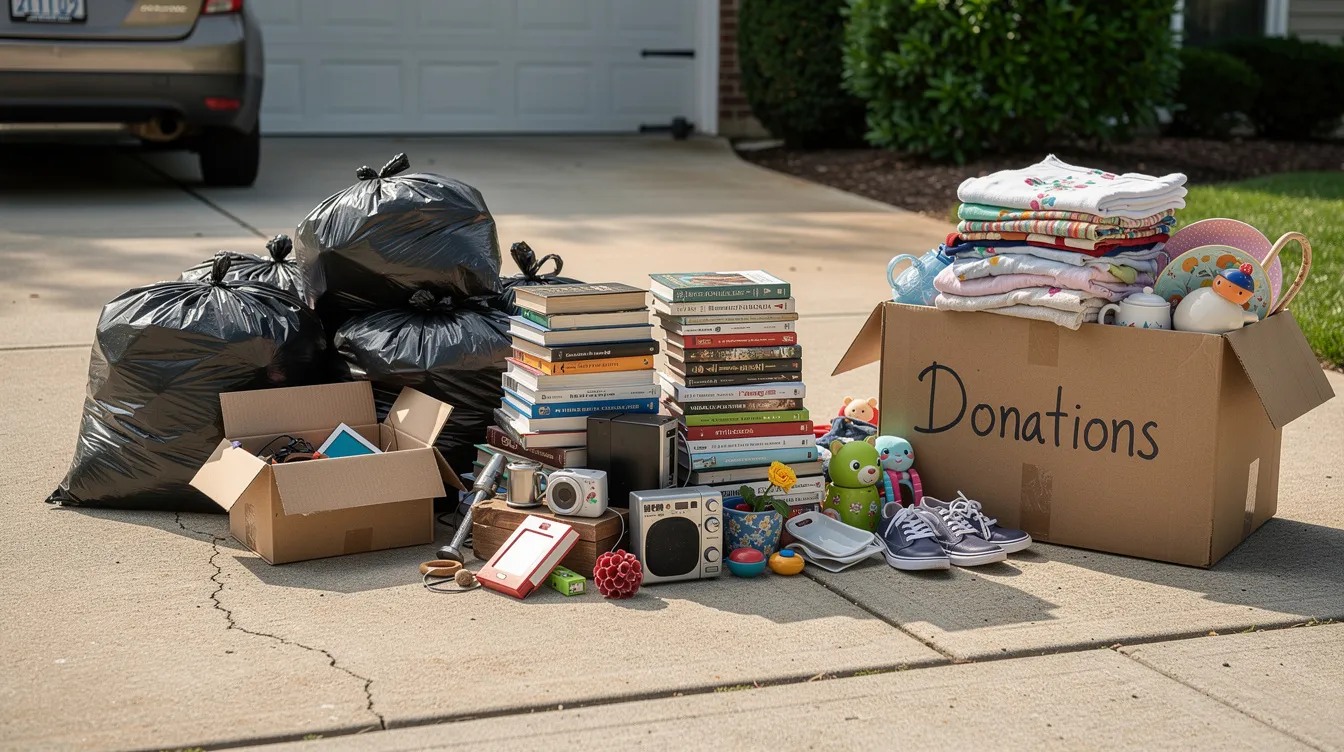
Four piles, decided once, moved the same day
Hazardous Materials
Older garages hide things that cannot go in regular trash, usually spread across dozens of half-used containers on a back shelf:
- Old paint, stain, and varnish
- Pesticides and weed killers
- Automotive fluids: motor oil, antifreeze, brake fluid
- Propane cylinders and aerosol cans
- Car batteries and household batteries
Keep containers upright, never mix chemicals, and do not put any of it at the curb. Philadelphia runs seasonal household hazardous waste collection events that take paint, automotive fluids, batteries, pesticides, and solvents free for residents.
A few specifics: tires go back through tire retailers, refrigerators and freezers need refrigerant removed before disposal, and large electronics go through dedicated recycling programs.
Deep Clean the Empty Space
With the garage empty, this is the reset. Work top to bottom.
- 1Ceiling and upper walls. Knock down cobwebs from corners and exposed framing, dust light fixtures and door tracks. A shop vac with a brush attachment beats a broom here
- 2Walls, shelves, windows. Wipe everything down and inspect as you go for pests, moisture staining, or mold. Handle small repairs now, while you can actually see them
- 3The floor. Sweep thoroughly, then hit stains with degreaser and a stiff brush. A pressure washer works on concrete slabs if drainage allows, otherwise scrub with warm soapy water and mop
Baking soda handles the odor that years of stored chemicals and damp cardboard leave behind. A few drops of tea tree oil in the mop water discourages mold.
If budget allows, consider a concrete sealer or epoxy coating while the floor is bare. A professionally installed epoxy system lasts 10 to 20 years, while big-box DIY kits typically last one to three because they skip the mechanical grinding and topcoat thickness the professional systems use.
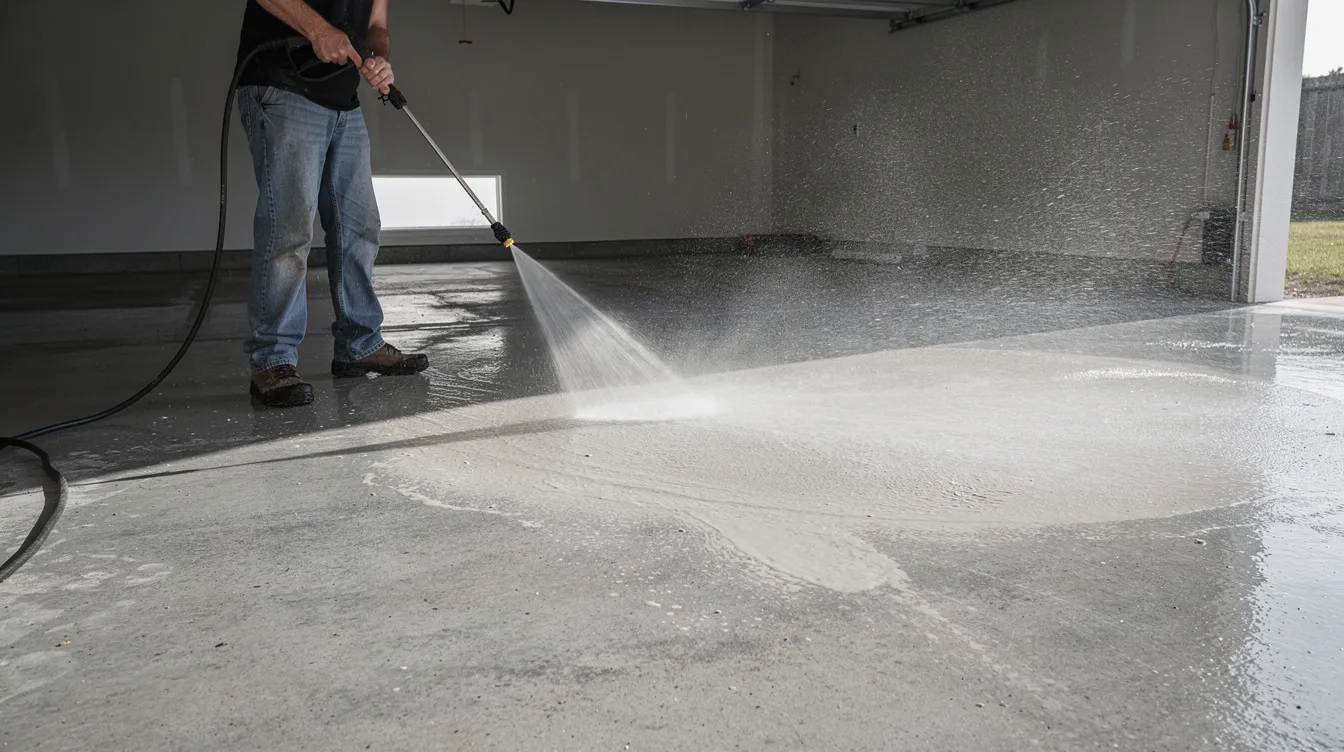
The one chance you will get at the floor for a few years
Storage That Actually Holds Up
A clean garage stays clean only if there is a system keeping things off the floor. Without one, the clutter comes back within months.
- Pegboards and slatwall. Slatwall handles heavier hanging loads and reconfigures easily. Pegboard is cheaper and fine for lighter tools.
- Track systems. Adjustable hooks let you hang bikes, ladders, and rakes, then move them without drilling new holes.
- Wall-mounted shelving. Holds bins, paint, and car supplies. Sliding shelves in cabinets stop things getting buried at the back.
- Overhead racks. Ceiling space is free real estate in a small city garage. Seasonal bins, camping gear, and holiday decorations go up there.
Zone the walls by function: yard tools on one, sports gear on another, tools and workbench on a third, and a dedicated cabinet or corner for paint and chemicals.
Use clear plastic bins rather than cardboard. They keep out moisture and pests and you can see what is in them. Label on at least two sides so the bin is readable from any angle on a shelf.
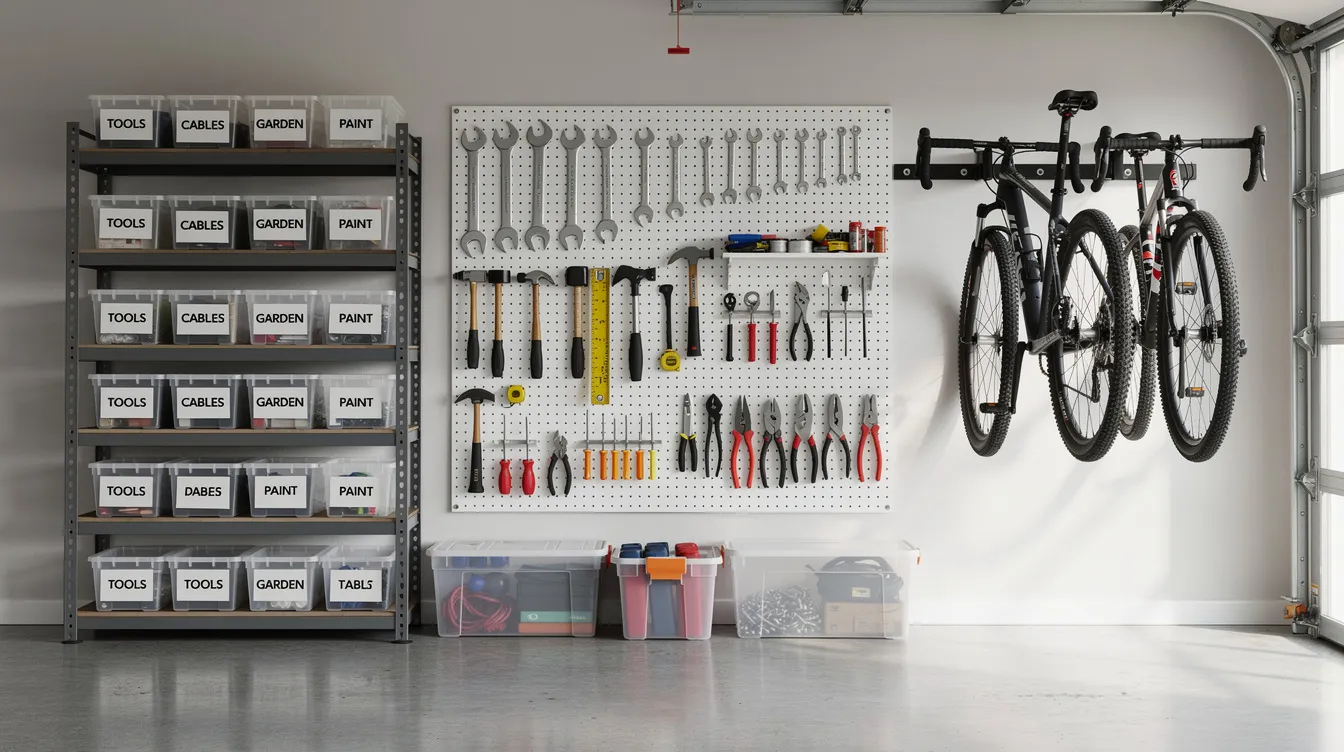
Vertical storage is what keeps the floor clear
Putting It Back
Follow the layout you sketched, and put back only what made the keep pile.
Rarely used things go high or deep: overhead racks and upper shelves for seasonal items, camping gear, and decorations. Frequently grabbed tools, sports gear, and car products go at eye level near the door.
A few stations worth setting up: a car products cabinet where the vehicle parks, a tool wall near the workbench, and a bin or ball corral for kids' sports gear.
Leave some empty space. A garage packed to capacity, even an organized one, slides back into chaos faster than one with breathing room. Anything without a clear home should go to the donate pile rather than into a random corner.
Keeping It That Way
- Monthly reset, 10 to 15 minutes. Sweep, dust the shelves, break down accumulated cardboard, return strays to their zones.
- Seasonal purge, spring and fall. Tie it to real dates. Memorial Day and Labor Day weekends work well, and everyone in the house participates.
- One in, one out. New gardening tools mean the old rusted set leaves. A new shelf goes up only if an old one comes down.
- Same-day returns. Everything goes back on its hook or in its bin the day it is used. This single habit does more than the other three combined.
If clutter creeps back fast after a move, a renovation, or an estate cleanout, deal with it as a reset rather than letting it compound for another few years.
When to Call Someone
Some garages are too packed, too heavy, or too time-sensitive to handle alone. Before a move-out, a home sale, or a renovation, a crew turns weeks of procrastination into a single visit.
Signs it is time for a professional garage cleanout:
- You cannot see most of the floor
- Large furniture, appliances, or construction debris is blocking access
- You are dealing with an estate or an eviction
- Hazardous materials need proper disposal
- You cannot safely handle the heavy lifting
Nationally, most homeowners pay between $200 and $700 for a professional garage cleanout, with the average around $450. Our crews empty the garage, haul the furniture, appliances, electronics, and exercise equipment, and sort for donation and recycling on the way out. Same-day service is often available, next-day as a backup, with upfront pricing and no hidden fees.
Park in Your Garage Again
Point at what goes and we handle the rest. Same-day garage cleanouts across Philadelphia, with donation and recycling sorted on the way out.