
How Do I Get Rid of Stuff in My Storage Unit?
Opening the door and finding the unit packed floor to ceiling is where most people stall out. With a plan and a deadline, you can empty it in a single weekend and stop paying rent on things you had forgotten you owned.
The Short Version
The fastest option in Philadelphia is booking a same-day storage unit cleanout. If you would rather handle it yourself, here is the sequence:
- 1Set a firm move-out date and build an inventory list
- 2Sort into four piles: keep, sell, donate, get rid
- 3Give the facility notice, usually 14 to 30 days depending on your contract
- 4Arrange transport: your own truck, a rented van, or a removal crew
- 5Clean the unit to whatever standard your contract requires
- 6Confirm move-out in writing so billing actually stops
The usual suspects people want gone: old couches, tube TVs, broken appliances, stained mattresses, boxes of clothes from the nineties, and toys nobody has touched in years.
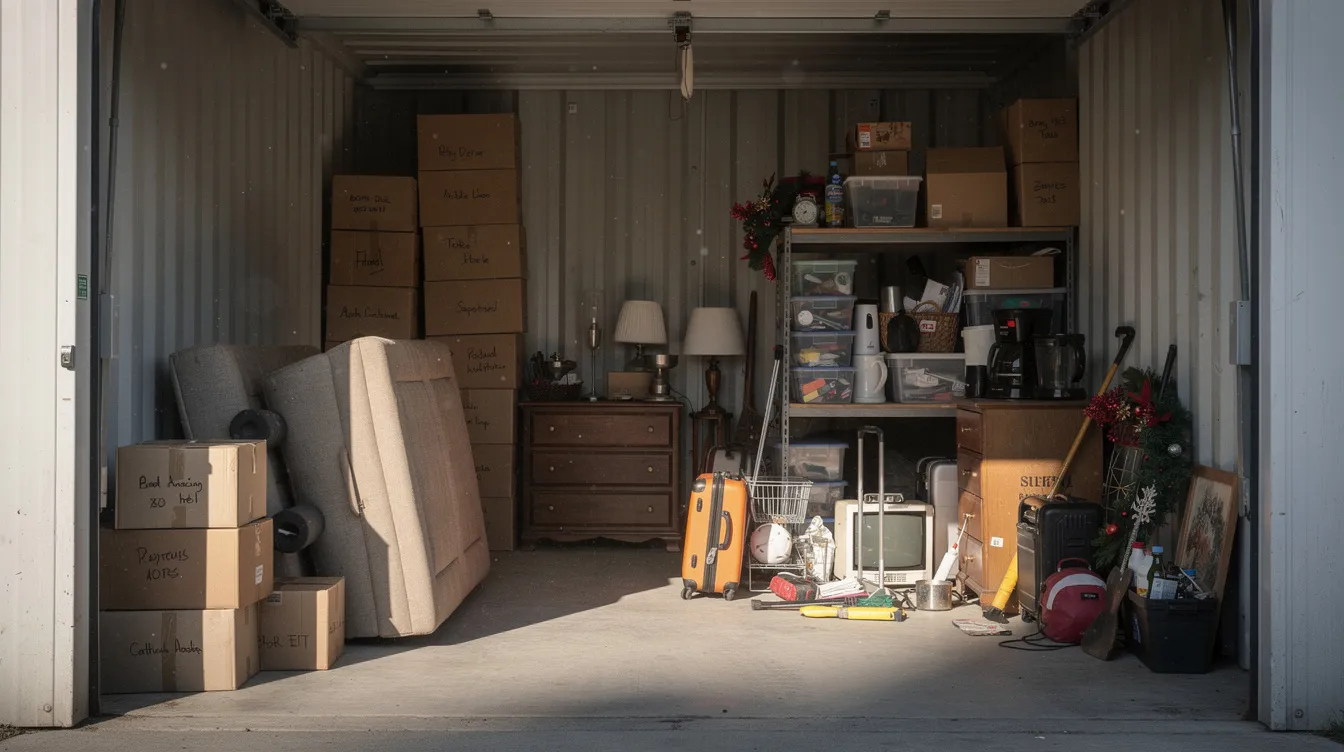
The floor-to-ceiling unit is why most cleanouts get postponed for another year
Start With a Deadline and an Inventory
A specific date is what turns an overwhelming unit into a weekend project. Pick one, then work backward to schedule your sorting sessions and any help you need.
Walk the unit row by row and write down the major items: sofa, queen mattress, eight banker boxes of paperwork, four bins of holiday decorations. Label as you go with color-coded tape, green for keep, red for get rid, blue for unsure. Grouping similar items together lets you estimate volume quickly, which matters when you are deciding between an SUV, a rented van, and a full truck.
An inventory also protects you. It confirms nothing was left behind and documents valuable items if you need to make an insurance claim later.
Check your notice period before you book anything. Most Philadelphia-area storage contracts require 14 to 30 days' written notice before you vacate. Miss it and you pay for another month on an empty unit. Your rental agreement, not state law, sets that window, so read it rather than assuming.
Sort the Contents: Keep, Sell, Donate, Get Rid
Every item gets one of four labels. Work in two to three hour blocks with breaks, because decision fatigue is what ends most cleanout attempts halfway through.
Pull things into an open corridor or the driveway if the facility allows it, then go box by box:
| Pile | What Belongs There |
|---|---|
| Keep | Family photos, important documents, tools you actually use, sentimental pieces you will display at home |
| Sell | Vintage furniture in good shape, designer clothing, collectible records, working electronics |
| Donate | Gently used coats, dishes, kids' toys, housewares, small appliances that still run |
| Get rid | Stained mattresses, broken shelving, tube TVs, rusted grills, anything past repair |
The twelve-month rule works well here. If you have not used it in a year and you forgot it was in there, it belongs in donate or get rid. Be honest about guilt versus value. Something you have been paying to store since 2019 has already cost you more than it is worth.
Watch for hazardous material. Paint cans, chemicals, car batteries, and propane tanks need special handling and cannot go in a regular dumpster. Set those aside and ask before you load them into anything.
You do not need to sort perfectly before help arrives. Discarded Junk Removal takes mixed loads including furniture, appliances, electronics, boxes, and bagged trash in the same visit.
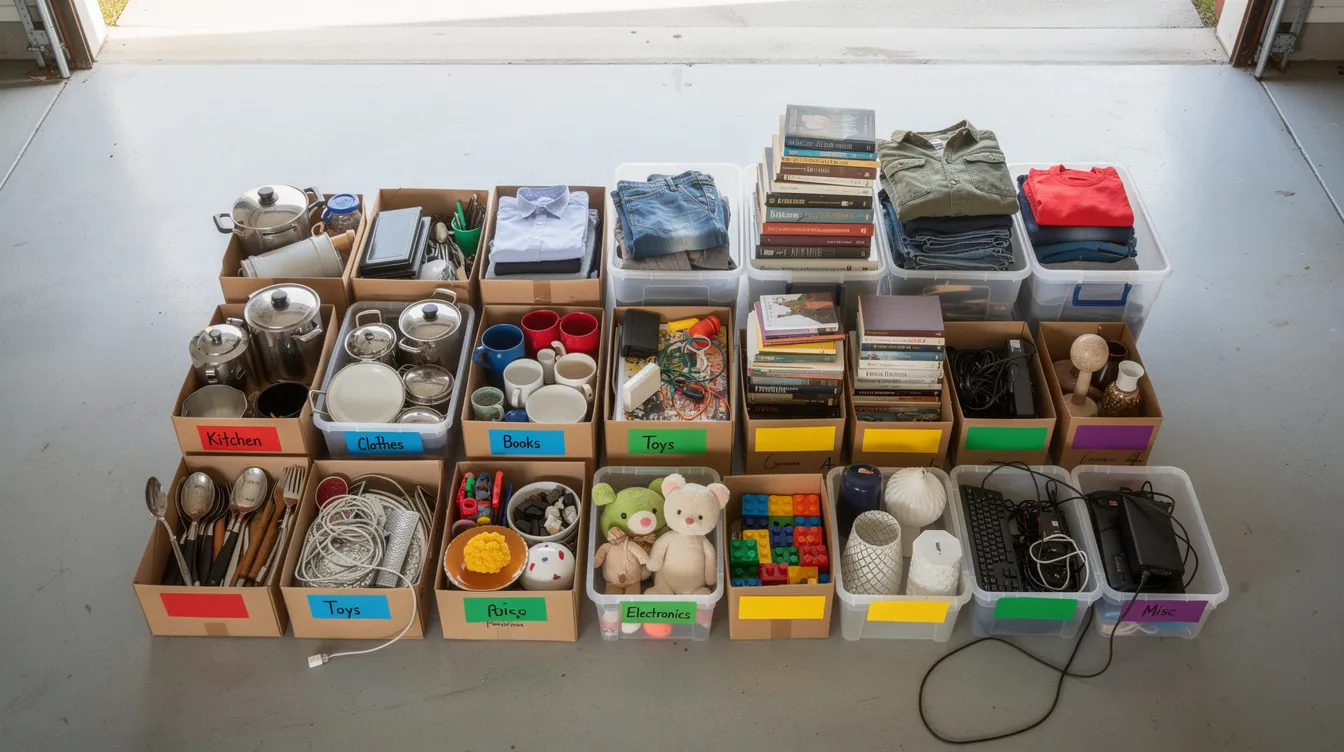
Color-coded tape beats trying to remember what you decided about each box
Selling: Worth It, But Set a Deadline
Selling turns clutter into a little cash, but it is also where cleanouts go to die. People spend three months trying to move a $40 bookshelf while paying $150 a month in rent.
Pull out only the genuinely valuable pieces and list them on Facebook Marketplace, Craigslist, or OfferUp. Philadelphia consignment shops do well with designer clothing, and local vintage dealers may want collectibles. Photograph items in daylight outside the unit with short, specific descriptions.
Then set a hard rule: if it has not sold in 10 to 14 days, it moves to donate or get rid. Run the math on storage rent against what the contents are actually worth. A few more months of rent usually exceeds the resale value of everything in there.
Donate What Still Has Life
Clean clothing, working kitchen appliances, dishes, kids' bikes, and furniture without heavy damage all find homes easily. Philadelphia has plenty of options, including the donation sites listed by Project HOME. Schedule pickups in advance rather than hoping to drop off on a Sunday.
Keep a written list of what you gave and ask for a receipt if you plan to claim the deduction. Something like "3 boxes of books, 1 dresser, 2 bags of clothing, November 2026" is enough.
One thing to avoid: do not donate stained, torn, or broken items. Charities have to pay to dispose of them, which just moves your disposal cost onto a nonprofit.
Getting Rid of the Rest
The get rid pile is usually the biggest and the heaviest, and it is where most people decide to bring in help. Storage facilities generally allow light trash in their on-site dumpsters, but not bulky furniture, construction debris, or electronics.
Cardboard and packing material breaks down for recycling. Electronics need certified e-waste handling, which is included in our electronics recycling service on every cleanout.
Junk removal prices on how much space your load takes in the truck. The average junk removal job in Philadelphia runs around $294, with most falling between roughly $161 and $452 depending on volume and item type. Same-day and next-day appointments are usually available when a move-out deadline is closing in.
This is the right call for sectional sofas, water-damaged mattresses, old filing cabinets, and the pile of miscellaneous boxes that would otherwise take six car trips.
Clean and Close Out Properly
Once it is empty, two things remain: meet the move-out condition and make sure billing actually stops.
- Sweep the floor and collect loose debris like packing tape, broken plastic, and labels
- Wipe down obvious spills or stains
- Get it to swept-clean condition, which is what most self storage contracts require
- Remove your lock and keys
- Leave the door open if the facility asks you to
Check the corners, look near the ceiling, and confirm nothing is hiding at the back before you call it done. Then complete the final inspection with the facility manager, or send photo proof of the empty unit, and get written confirmation that your move-out is processed. Without that last step, people routinely get billed for another month.
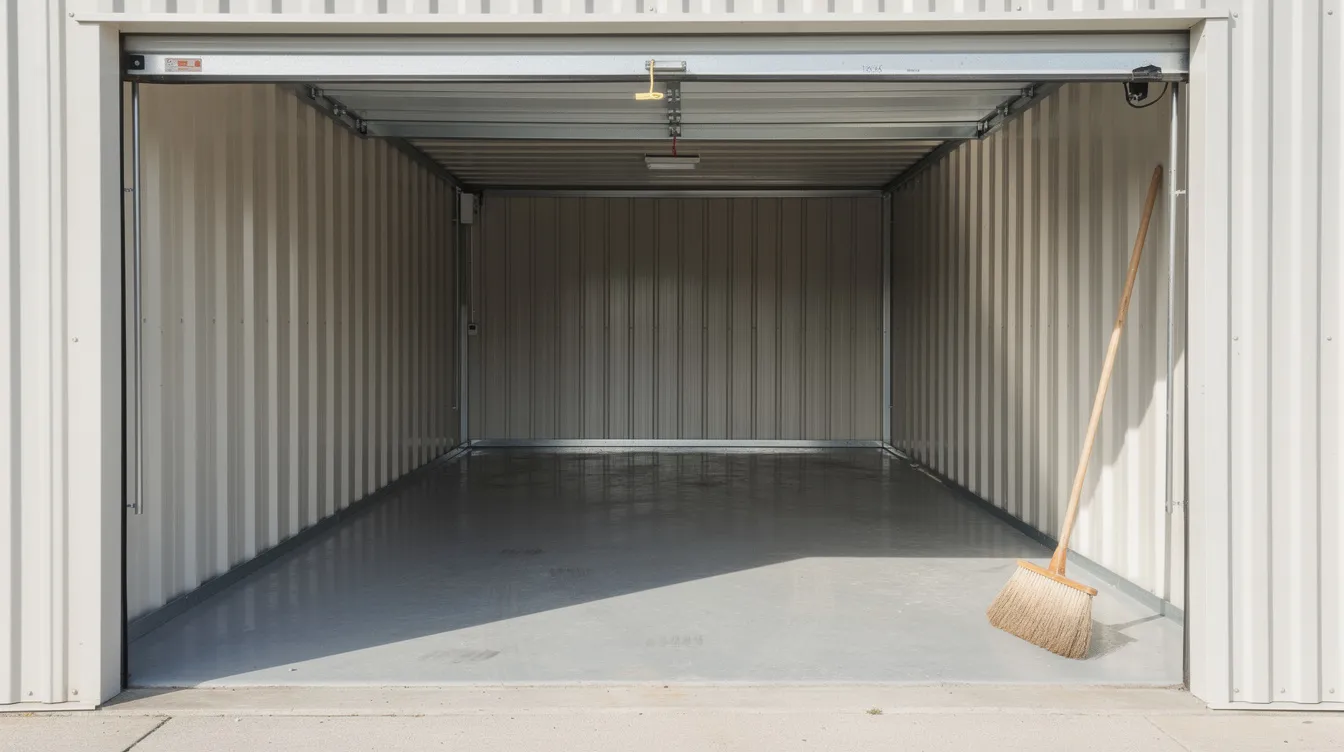
Swept clean, lock off, and confirmed in writing
When to Call for a Storage Unit Cleanout
DIY stops being realistic when the deadline is tight, the unit came with an inherited estate, the space is packed to the ceiling, or you simply have no truck and no help.
Our crew handles the whole range: sofas, beds, dressers, washers, dryers, refrigerators, electronics, office furniture, boxes of housewares, clothing, and general clutter.
- Same-day and next-day appointments
- Upfront pricing with no hidden fees
- Licensed and insured crews
- Donation and recycling handled as part of the job
We work with renters, homeowners, and small businesses using self storage across Philadelphia and the nearby suburbs, and we are used to working inside facility rules and access hours.
Stop Paying for a Unit You Don't Need
Same-day storage unit cleanouts across Philadelphia. We clear it, sweep it, and handle the donations and recycling so you can close the account.