
Best Way to Clean Out an Estate: A Step-by-Step Guide for Families
Facing a house full of belongings, memories, and decades of accumulated things is enough to stop most people in their tracks. Whether you are dealing with a death in the family, a divorce, or a major move, there is a way through it that does not end in regret or a family argument. Here is the order to do it in.
The Short Version
The best way to clean out an estate is to work in phases: secure the property and establish legal authority, sort personal and valuable items with the family, then bring in professional help for the removal and final cleaning. A clear plan and early communication are what prevent disputes.
Most families wait two to eight weeks after a funeral to start. That is normal, and emotional readiness matters more than speed. Rushing the process is what tends to produce regret and conflict, so build a plan that respects both the property and the people involved.
- 1Get legal authority and secure the property
- 2Involve family members and set ground rules
- 3Sort personal, valuable, and unwanted items
- 4Decide how to sell, donate, and dispose of the rest
- 5Bring in professional help
- 6Final cleaning and getting the property ready
Where we fit in. Discarded Junk Removal is a licensed, insured Philadelphia junk removal company handling full estate cleanouts, including furniture, appliances, and everything left over, once the family has chosen what to keep. For how long the whole process usually takes, see our estate cleanout timeline guide.
Step 1: Get Legal Authority and Secure the Property
Before anyone touches personal belongings, someone needs legal authority over the estate. Securing the home comes first, ahead of any sorting.
- Locate the will, the death certificate, and any document naming the executor or personal representative. It may be in a filing cabinet or with the deceased person's attorney. In Philadelphia, the Register of Wills handles probate and can walk you through the filing process, though they cannot give legal advice.
- Rekey exterior locks, update alarm codes, and collect spare keys from neighbors or caregivers. This protects valuables and prevents anyone walking in unannounced.
- Walk the property to check utilities, leaks, open windows, and any signs of vandalism. Forward the mail to the executor's address.
- Box critical paperwork separately: deeds, mortgage statements, insurance policies, bank records, car titles, and at least seven years of tax returns.
- Get short advice from an estate attorney before discarding anything that might be part of probate. That conversation costs less than the problem it prevents.
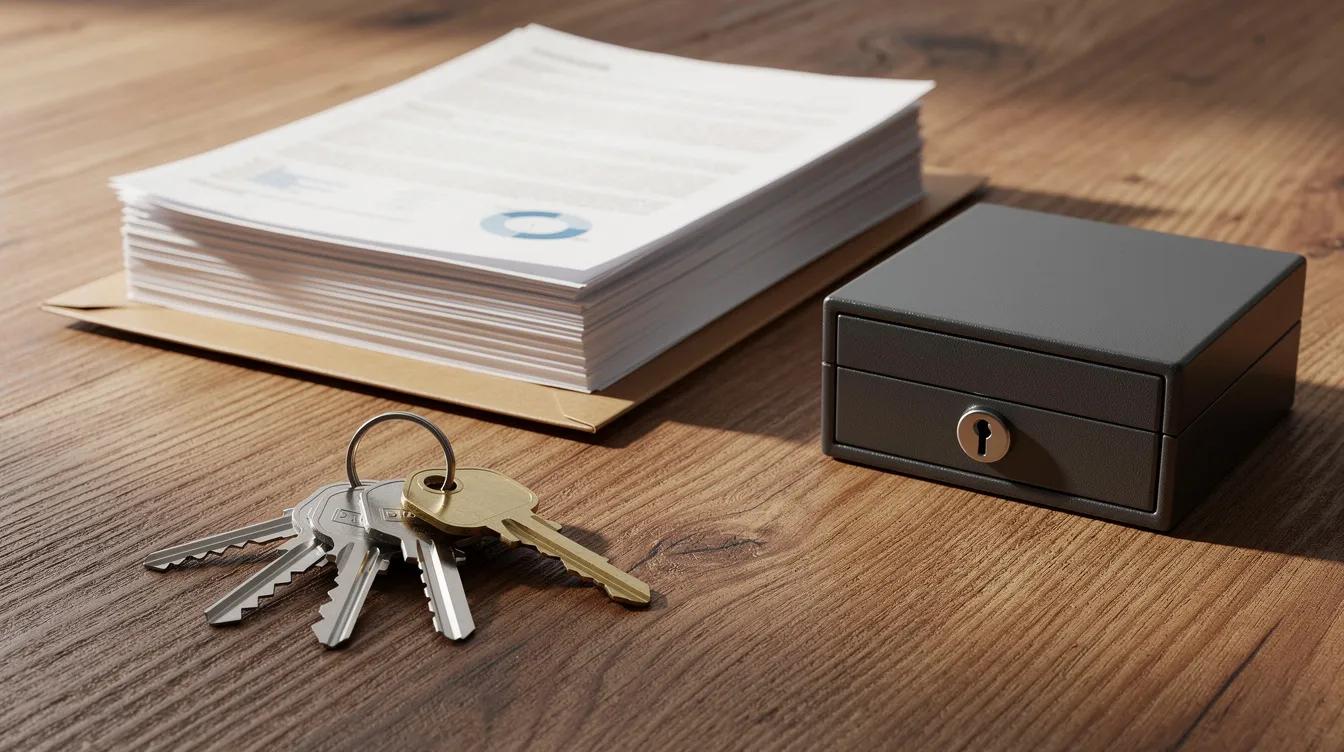
Keys, paperwork, and access control come before anything gets moved
Step 2: Involve Family Members and Set Ground Rules
Early communication prevents most conflict over personal and sentimental items. A walkthrough with the family surfaces the emotionally loaded objects before they become an argument.
- Hold a family meeting, in person or by video, to lay out the plan, the dates, and who is in charge.
- Set a hard deadline for relatives to claim what they want. Something like "by April 30, everyone chooses." Without a deadline, cleanouts drag on indefinitely.
- Track claims in a shared spreadsheet so two people do not claim the same jewelry, tools, or furniture.
- Bequests written into the will take legal priority, and the executor has final say if a dispute arises. Document decisions in writing.
- Include out-of-town relatives by sending room photos or short videos, and offer to ship small keepsakes so distant family feels included.
Step 3: Sort Personal, Valuable, and Unwanted Items
Sorting is the heart of the job and the part that takes longest. For a 2,000 to 2,500 sq ft home, expect several weekends of focused work. Pace yourself and share the load.
The four-box method keeps decisions moving:
| Category | What Goes There |
|---|---|
| Keep | Claimed by family, heirlooms, photos, documents, memory boxes |
| Sell | Mid-value furniture, tools, collectibles, anything worth an estate sale or auction |
| Donate | Usable clothing, housewares, and furniture in good condition |
| Junk removal | Broken, damaged, moldy, or unsellable items and general debris |
- Start with clearly personal items: photos, letters, heirlooms, military records, yearbooks. Set aside a memory box for each close family member before anything else leaves.
- Photograph sentimental objects before letting them go. It preserves the memory without keeping the object, and it takes a lot of the guilt out of the decision.
- Get professional appraisals on high-value pieces: gold jewelry, original artwork, coin collections, vintage instruments, mid-century furniture. Do not guess on these.
- Work room by room. Expired food goes to trash, duplicate cookware to donation, working power tools to the sell pile. In the garage, group similar items together first, then decide.
- Anything heavy, hazardous, or obviously junk gets marked for the removal crew to take in one visit.
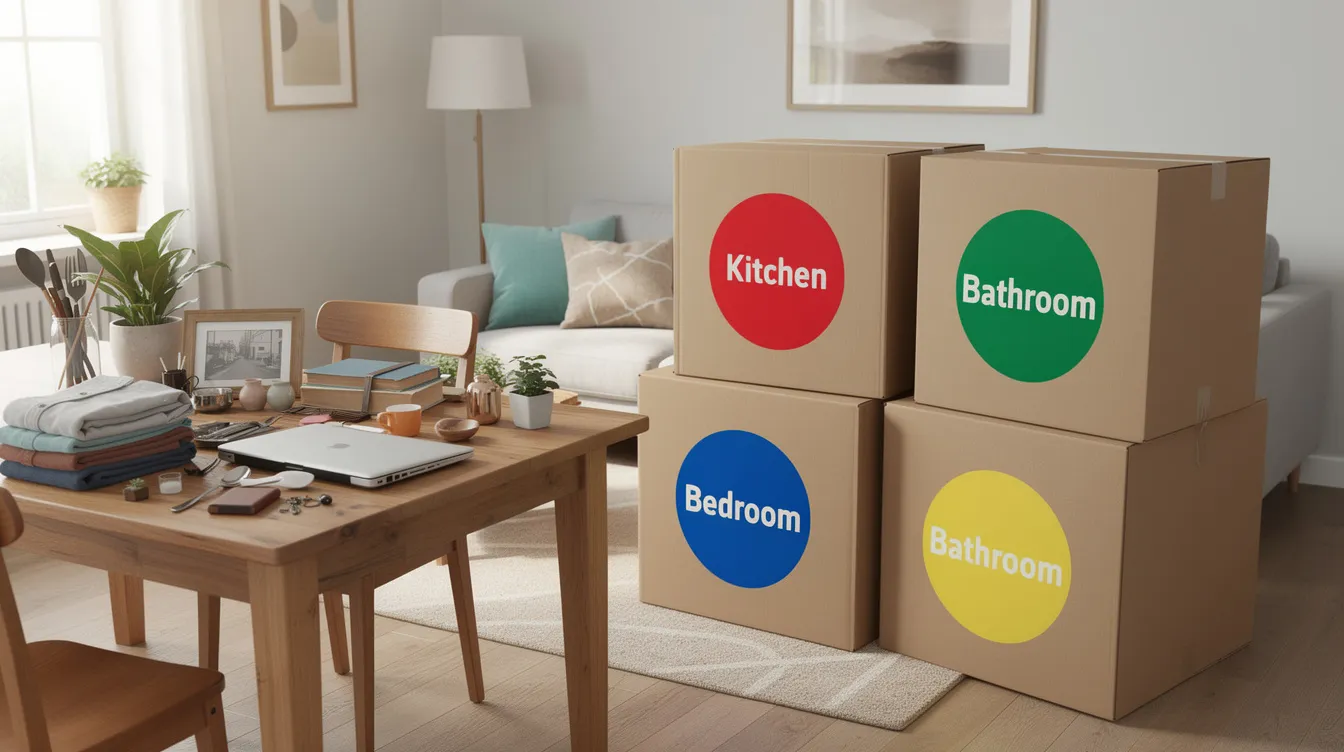
Labeled boxes and a claim deadline are what keep this phase from stalling
Step 4: Decide How to Sell, Donate, and Dispose of the Rest
Once the keepsakes and valuables are out, what remains is inventory to liquidate.
- Estate sales work when the house is mostly full of mid-value furniture and household goods. You can run one yourself over a weekend or hire a company, which typically takes 35 to 40 percent of gross proceeds. Price everything clearly and advertise locally.
- Skip the sale if the volume is small or the items are low value. The effort will cost more than it returns.
- Donations go to local charities, many of which offer pickup. Habitat for Humanity ReStores, the Salvation Army, and area furniture banks all take usable items. Always get a receipt for the tax deduction.
- Junk removal handles what is left: stained mattresses, water-damaged furniture, broken appliances. Every dollar recovered from the sale side offsets this cost.
Discarded Junk Removal can combine removal with donation runs, dropping reusable items at local charities and recycling electronics, metals, and cardboard along the way. Less goes to the landfill and more stays in the community.
Step 5: When and How to Bring In Professional Help
Professional help fits in at more than one point: sorting support early, and physical hauling once decisions are made.
- Clear signs it is time: hoarding-level volume, a deadline tied to a closing date or lease end, family who are elderly or out of state, or unsafe conditions like mold and heavy debris.
- What a crew does: a professional team can clear a full home in one to three days, carrying items down from any floor, loading trucks, sweeping out, and handling responsible disposal.
- What it costs: estate cleanouts generally run $500 to $6,000 depending on size, volume, and special requirements. Our full house cleanout cost guide breaks that down by property type.
- Prepare for the crew: label any "do not take" rooms or boxes, move documents and sentimental items out of the house entirely, and sort out driveway or alley access ahead of time.
- Urgent timelines: same-day and next-day appointments are usually available when a buyer walkthrough or lease end is 48 hours out.
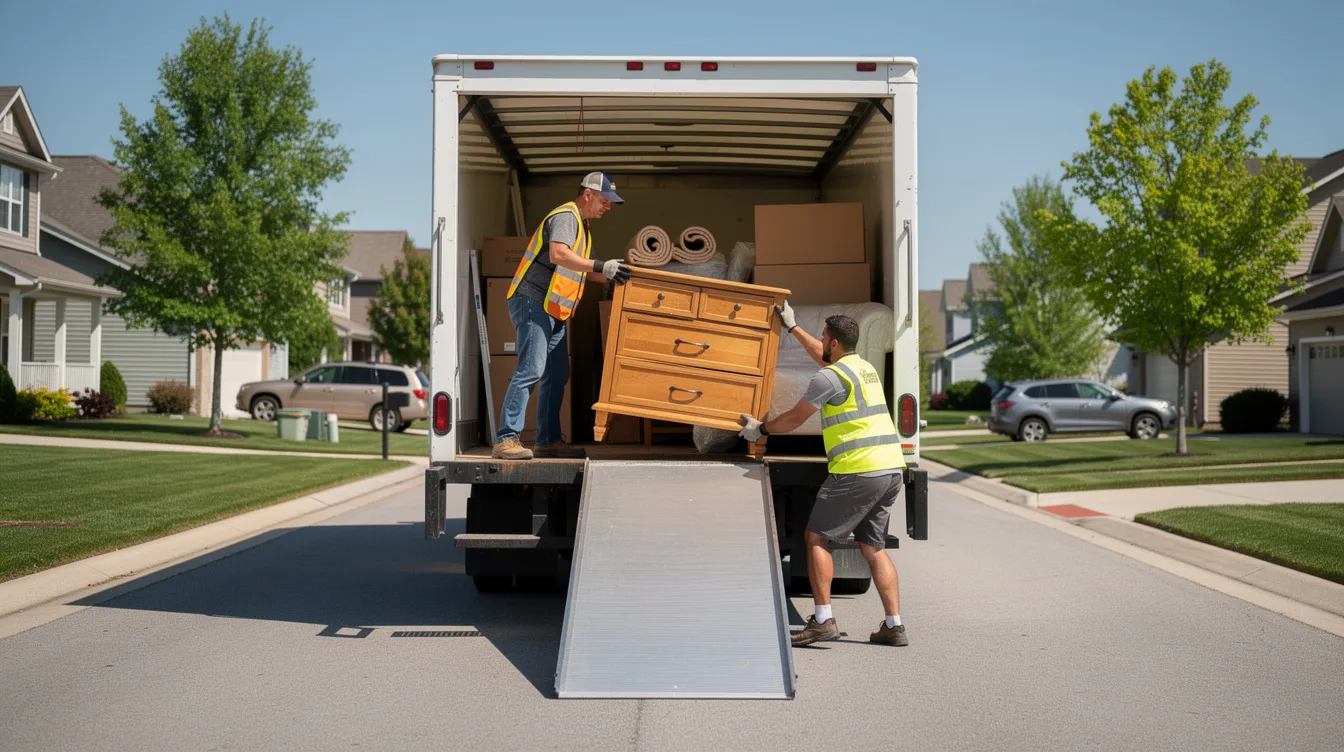
Removal day, once the family decisions are behind you
Step 6: Final Cleaning and Getting the Property Ready
With the furniture and junk gone, the last stage is making the home presentable for sale, rental, or handing keys back to a landlord.
- Sweep and vacuum, wipe surfaces and cabinets, clean bathrooms and kitchen appliances, and pull remaining nails and hooks out of the walls.
- Small fixes carry real weight with agents and buyers: touch-up paint on scuffed walls, fresh bulbs, a mowed lawn, and trimmed shrubs before listing photos.
- In older rowhomes and twins, check basements and back alleys one more time. That is where forgotten junk hides, and buyers notice.
- Do a final walkthrough with the executor using a checklist, so nothing personal is left behind in closets, crawlspaces, or storage nooks.
If surprise items turn up during cleaning, a last truckload can usually be scheduled quickly, whether that is a full house cleanout or one final load to hit a closing date.
One Last Thing
A well-managed estate cleanout honors the person it belonged to. What matters gets preserved in the photos, the memory boxes, and the stories the family carries forward, not in the things left behind. Most people feel real relief once the property is clear. The hardest part was starting.
Need Help With an Estate Cleanout in Philadelphia?
Free, upfront estimates with no pressure. We handle the hauling, the donation runs, and the disposal so your family can focus on the decisions that matter.