
How Long Does an Estate Cleanout Take? A Practical Timeline Guide
Clearing out a loved one's estate combines physical work, emotional weight, and logistical coordination. Most people expect a weekend job. The reality is that a full estate cleanout runs 3 to 6 weeks once you account for sorting, legal steps, donations, and disposal. Here is the timeline phase by phase, with real numbers instead of guesses.
Quick Answer: Typical Estate Cleanout Timelines
With a professional crew, most Philadelphia-area homes take 1 to 7 days of on-site work:
Small Home
1–3 daysApartment or small rowhome
Medium Property
3–5 days3 to 4 bedrooms with storage areas
Large Estate
1–2 weeks5+ bedrooms, garage, outbuildings
Those numbers cover the physical removal only. The full timeline, including family sorting, document searches, and legal approvals, runs longer. An average-sized home takes 3 to 6 weeks start to finish, from the first walkthrough to the final handoff.
By contrast, DIY estate cleanouts with limited help often stretch across several weekends or into months. Sorting personal belongings is the single most time-consuming part of the job, and without a structured plan the project stalls when emotions and conflicting schedules slow the decisions down.
Working against a hard date? Same-day and next-day appointments compress the calendar when a closing, foreclosure deadline, or lease expiration is driving the schedule. Discarded Junk Removal offers both across Philadelphia and the surrounding suburbs.
Average Timeframes by Property Size and Situation
Three things drive how long the job takes: square footage, the volume and nature of the belongings, and how much urgency is attached to the date.
- 1 to 2 bedroom apartments and small rowhomes: A crew typically finishes in 1 to 2 days. Add several days if the family is sorting everything first. Apartment cleanouts at this scale are the fastest to complete.
- 3 to 4 bedroom homes (1,400 to 2,500 sq ft): On-site work usually runs 3 to 5 days. A single room might clear in hours, but basement and attic storage adds up quickly.
- Larger properties with outbuildings: 5+ bedrooms, garages, sheds, and decades of accumulation often need 1 to 2 weeks of crew time. Extensive collections can stretch the whole project to 2 or 3 months when an estate sale is involved.
- Special cases: Foreclosure cleanouts, hoarding situations, and long-vacant properties may need safety inspections, pest checks, or hazardous waste handling before removal starts, adding 1 to 3 days of planning and on-site work.
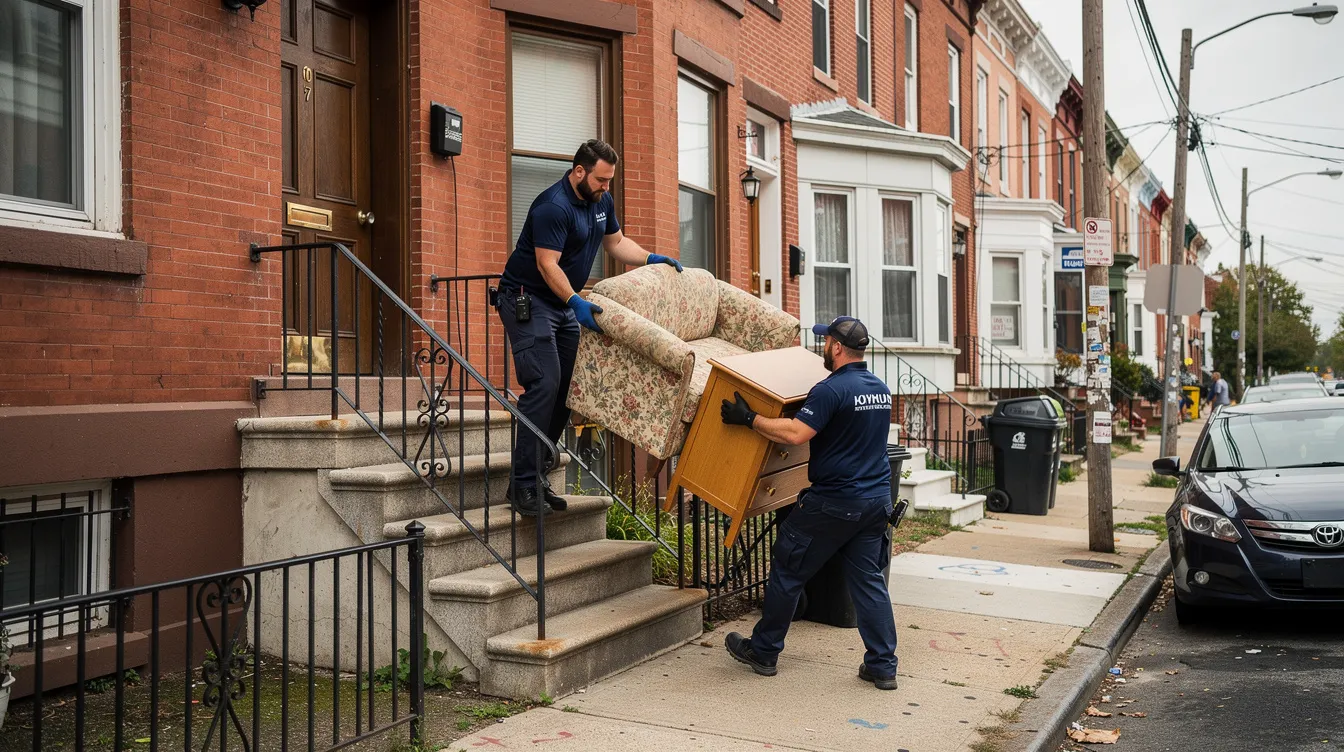
Removal is the fastest phase once the family decisions are made
The Four Phases of an Estate Cleanout
An estate cleanout is more than hauling items to a truck. It breaks into distinct phases, each with its own time demand.
- 1Documents and valuables (1 to 3 days). Before anything moves, locate wills, deeds, insurance policies, financial records, and tax returns. Walk the whole house first to find the storage areas where paperwork tends to hide
- 2Family decisions (several days to 3 weeks). Heirs decide what to keep, sell, and donate. This phase slows when family lives far apart or disagrees. Distribute claimed items before clearing the rest
- 3Removal and donation hauling (1 to 5 days). The fastest step once decisions are final. A crew clears furniture, appliances, bagged trash, and donations in coordinated trips
- 4Follow-up (1 to 3 days). Deep cleaning, minor repairs, and getting the property ready for staging or listing photos, usually scheduled after the cleanout wraps
What Speeds Up or Slows Down a Cleanout
Two estates of the same size can differ by weeks. The gap usually comes down to these:
- Layout and access: Multi-story rowhomes, tight stairwells, narrow hallways, and low-ceiling basements all slow the haul-out. Packed garages and outbuildings can add 30 to 50 percent more time to that phase.
- Volume and type of contents: A lightly furnished house clears in a fraction of the time a home with decades of accumulation, pianos, safes, or large collections takes.
- Number of decision-makers: Coordination is the hidden delay. Disagreements over who gets what, or whether to run an estate sale rather than donate, can stall progress for weeks.
- Hazardous materials and e-waste: Old paint, chemicals, fuel, sharps, and electronics need separation and specific disposal. Identifying them ahead of time saves crew hours.
- A firm target date: When there is a specific closing, listing, or move-out date, the schedule gets built backward from it, and everyone works toward the same deadline.
Emotional and Legal Factors That Affect the Timeline
Estate cleanouts usually follow a loss, and the emotional load can be heavier than the physical one. Sorting belongings brings up memories, and sentimental items like photographs, letters, and keepsakes take far longer per item because families pause, revisit decisions, and want closure.
A few things that help keep progress moving without rushing anyone:
- Work in short sessions of 2 to 3 hours rather than marathon days
- Label everything clearly: keep, donate, sell, junk
- Give one person the role of keeper of stories, capturing memories and setting aside photos so the group can keep moving
- Bring in professional estate cleanout services for the physical work so the family handles decisions instead of logistics
On the legal side, executors may need court authorization before disposing of or selling certain belongings. Some items cannot leave the property until an attorney or the probate court signs off, and that wait can add days or weeks. Treat legal coordination as a real scheduling factor, not a formality.
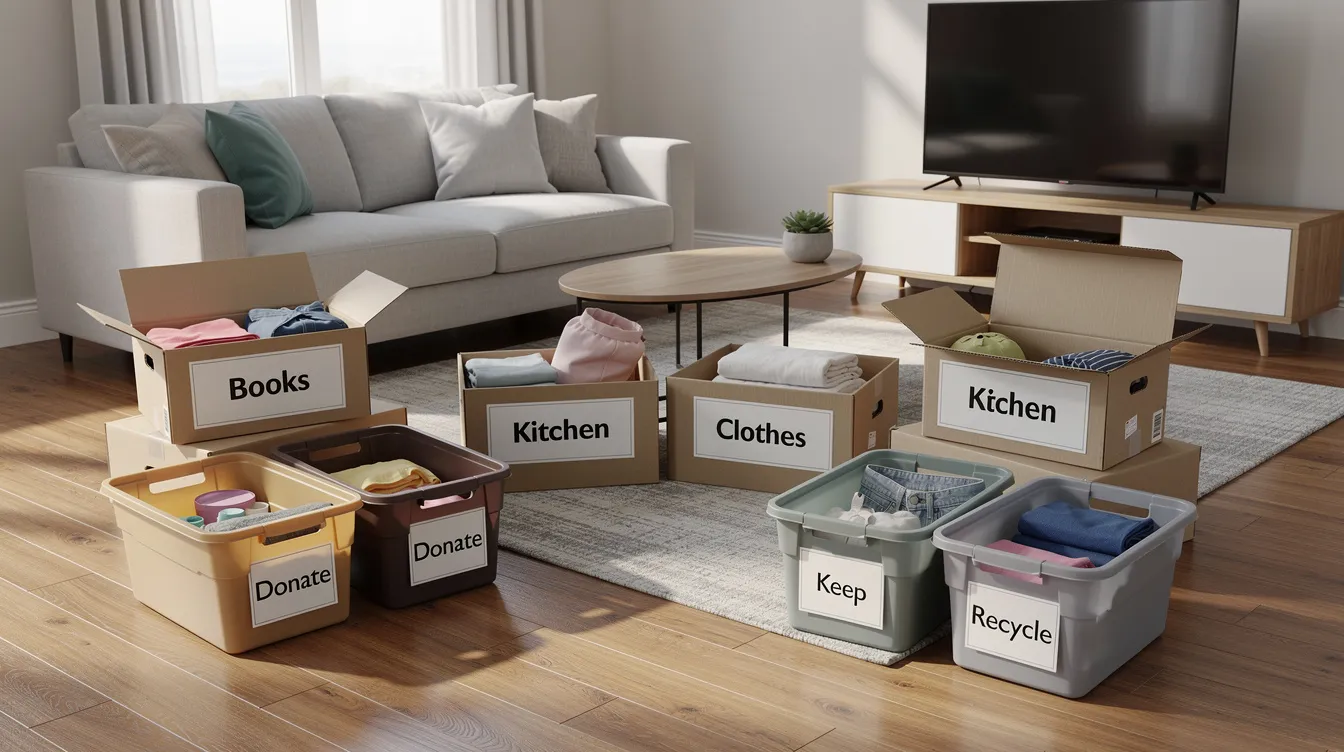
Clear labels are what keep the sorting phase from stalling out
DIY vs. Professional: How the Timelines Compare
Families often start with the best intentions and underestimate what the work requires. The difference between the two approaches is measured in weeks, not hours.
| Approach | Typical Duration | What It Looks Like |
|---|---|---|
| DIY, nights and weekends | 6 to 12 weeks | Limited truck space, repeated landfill trips, no structured plan, progress tied to everyone's availability |
| DIY with a junk removal finish | 2 to 4 weeks | Family sorts and claims, then a crew clears the last 20 to 30 percent of stubborn items in a single visit |
| Full professional cleanout | Under 1 week on site | Scheduled crew, large trucks, sorting, removal, donation, and disposal handled in coordinated visits |
Local companies also tend to move faster than national chains because they already know the area's donation centers, recycling facilities, and transfer stations. Having one team that also handles appliance removal and electronics recycling removes the need to coordinate separate vendors around each other's schedules.
Four Real Timeline Examples
These reflect common Philadelphia-area scenarios.
| Property | How It Went | Total |
|---|---|---|
| Center City 1-bedroom condo | Moderate furniture, no outbuildings. Family sorted in a day, crew cleared furniture, trash, and donations the next | 2 days |
| Northeast Philly 3-bedroom rowhome | Family tagged items across two weekends, then a house cleanout crew removed junk, appliances, and debris in 2 to 3 days. Broom-clean for the realtor walkthrough with donation receipts provided | About 1 week |
| Bucks County 5-bedroom home | Multiple outbuildings, four heirs coordinating remotely. Documents took a week, family decisions took two, removal ran several truckload days | 3 to 4 weeks |
| Foreclosure, tight deadline | Bank required the property cleared before closing. No sorting or sale phase, so foreclosure cleanout work was compressed into two full days | 2 days |

The end state: broom-clean and ready for listing photos
How Discarded Junk Removal Handles Your Estate Cleanout
Discarded Junk Removal is a full-service, licensed, and insured junk removal company based in Philadelphia. The crew handles heavy lifting, furniture and appliance hauling, and electronics recycling so the family can focus on decisions.
Items get sorted for disposal, donation, and recycling in one coordinated visit, with usable household goods going to local thrift stores and charities rather than the landfill. That keeps the cleanout moving without the family scheduling separate pickups with three different organizations.
Same-day and next-day service is available for estate cleanouts, move-outs, and foreclosure cleanouts across Philadelphia and nearby suburbs. Pricing is upfront with no hidden fees, based on an on-site estimate that accounts for volume, access challenges like stairs and narrow hallways, and any special handling for hazardous waste or heavy items.
Planning Your Timeline Step by Step
A written plan turns an overwhelming project into a sequence of tasks. Decide early whether you are bringing in professional help, because that changes every date downstream.
- 1Set a target completion date tied to a concrete event: listing date, closing date, or lease end. Work backward from there
- 2Block out the phases on a calendar. Give document searches their own days, and set a hard claim deadline for family sorting
- 3Book removal and donation pickups for dates after sorting wraps, early enough that the crew's schedule lines up with your realtor and attorney
- 4Add buffer time for the surprises: an extra storage area nobody knew about, an appraisal, or a legal approval that takes longer than expected
Most people underestimate estate cleanout timelines by 50 to 75 percent. Planning backward from a real deadline is what prevents that.
Costs and How Time Affects Your Budget
Longer, more complex jobs cost more. But a focused 2 to 3 day professional cleanout is often cheaper than months of piecemeal landfill trips, dumpster rental, and lost weekends.
| Service | Typical Cost Range |
|---|---|
| Estate cleanout, overall | $275 to $4,000 |
| Professional cleanout, large homes | $1,000 to $5,000 |
| Labor for movers | $25 to $50 per hour |
| Junk removal by volume | $60 to $700 per load |
For a fuller breakdown by property size and service level, see our guide to full house cleanout costs. If the property involves severe accumulation, hoarding cleanup pricing works differently again.
Discarded Junk Removal prices on volume, access, and complexity rather than hourly billing. You can lower the total by pre-sorting, removing obvious trash, and grouping items by category before the crew arrives. Flagging hazardous waste and donation items ahead of time helps the crew move faster too. Keep your donation receipts, since they may be tax deductible.
When to Call in Professional Help
If you have spent several weekends sorting and the house looks the same, DIY has stopped making sense. Common triggers:
- A looming closing date or listing deadline
- A foreclosure notice or city code violation
- Family members who are out of state, elderly, or unable to handle heavy lifting safely
- Weeks of slow decision making with no visible progress
Discarded Junk Removal regularly coordinates with realtors, attorneys, and property managers to hit tight dates on estate and foreclosure cleanouts across the Philadelphia region. Send photos or schedule a walkthrough and you will get a realistic timeline along with the estimate.
Get a Realistic Timeline for Your Estate Cleanout
Same-day and next-day availability across Philadelphia. Upfront pricing, donation receipts, and a crew that works to your closing date.